

- Authors

- Name
- Ahmad
- Role
- Senior Marketing Manager, Islamic education • DeenUp
بِسْمِ اللهِ الرَّحْمٰنِ الرَّحِيْمِ
In the name of God, the Most Gracious, the Most Merciful.
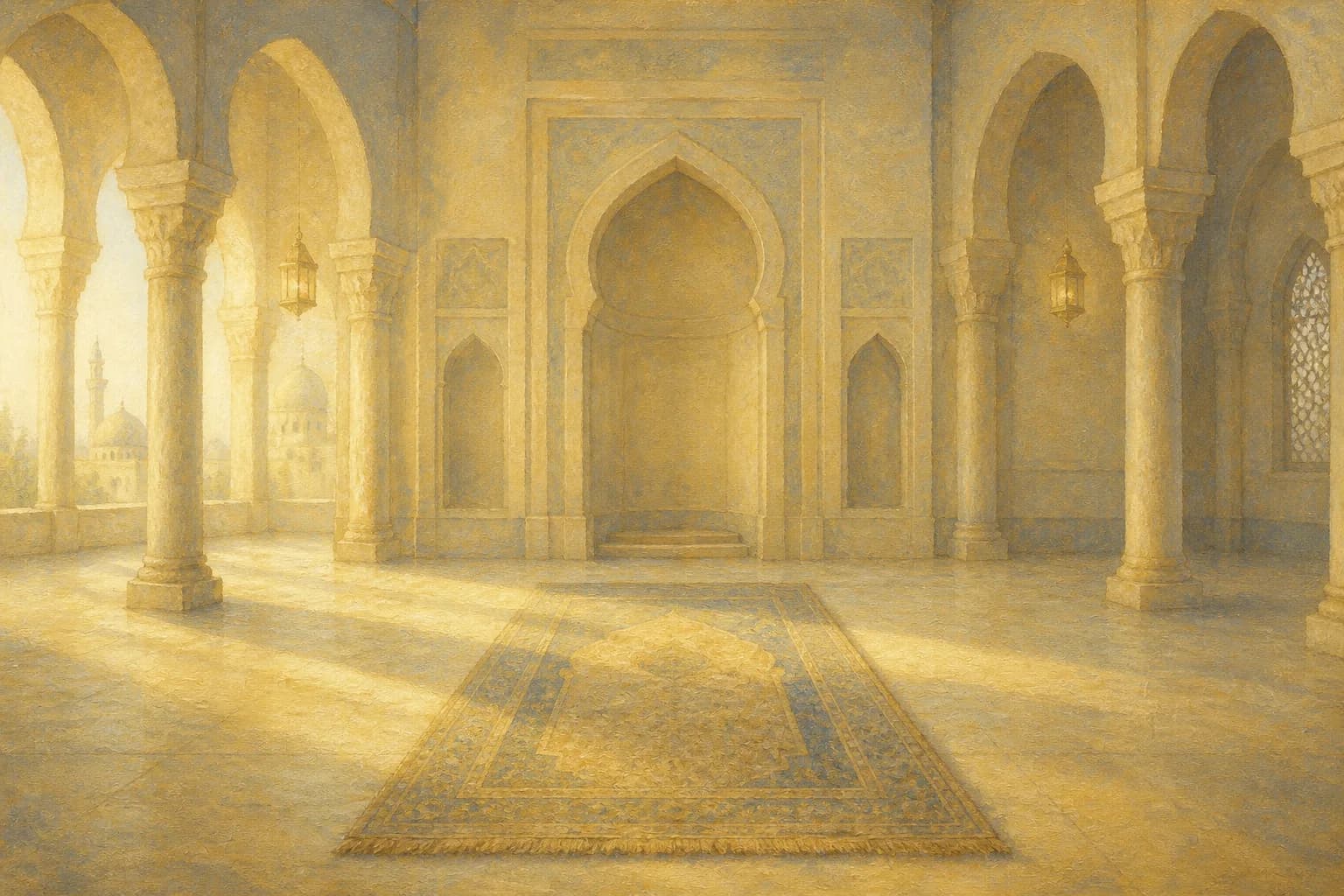

Every week arrives and passes. Most days feel indistinguishable in their routine. But the Prophet ﷺ described one day as categorically different — not slightly better, but cosmologically distinct from all others. Understanding why changes how you approach it.
Friday is not just the day of the congregational prayer. It is the day of Adam, the day of Paradise, the day of a blessed hour when dua is answered, and the day on which history will close. When you understand what Friday actually is, showing up for Jumu'ah stops feeling like an obligation and starts feeling like the obvious response.
What the Quran and Sunnah Teach About Friday
The Quran addresses Friday directly and without ambiguity. "O you who have believed, when the adhan is called for the prayer on the day of Jumu'ah (جُمُعَة), then proceed to the remembrance of Allah and leave trade. That is better for you, if you only knew." (Quran 62:9)
The phrase "if you only knew" is significant. It implies that the full weight of what Friday offers is not obvious — that there is more beneath the surface than most people register.
The Prophet ﷺ made that weight explicit: "The best day upon which the sun rises is Friday. On it, Adam was created, on it he entered Paradise, on it he was expelled from it, and the Hour will not be established except on a Friday." (Sahih Muslim 854)
This is a remarkable statement. Friday brackets human history — the beginning of the first person and the end of the world as we know it. Every Friday you live through is a small echo of that cosmological structure.
He also described a specific blessing that falls on this day: "There is an hour on Friday in which no Muslim stands and asks Allah for something but He gives it to him." (Sahih al-Bukhari 935) This sa'ah mubarakah (سَاعَةٌ مُبَارَكَة) — blessed hour — is one of the most distinctive features of the day, and the scholars have given careful attention to when it falls.
Why Friday Carries So Much Spiritual Weight
The significance of Friday is not arbitrary. It is connected to the nature of the day as a point of gathering, remembrance, and renewal.
Community as worship. The Jumu'ah prayer is a collective act. The Arabic root of the word means "to gather." When Muslims come together on Friday, they are not merely fulfilling a ritual — they are embodying something about the nature of the faith itself: that Islam is not a private transaction between the individual and God but a shared orientation of an entire community. For a deeper look at the prayer itself and its structure, the guide on the meaning of Jumu'ah covers the details with care.
Dhikr over dunya. The Quran's instruction to "leave trade" when the adhan sounds is a weekly reminder that the material world has a ceiling. What passes between you and Allah on Friday has a permanence that business, entertainment, and busyness do not. Every Friday is a chance to recalibrate.
The power of salawat. The Prophet ﷺ said: "Increase your salawat (صَلَوَاتٌ عَلَى النَّبِيِّ) upon me on Fridays, for your salawat are presented to me." (Abu Dawud 1047) Sending blessings upon the Prophet ﷺ is good on any day — on Fridays it carries special weight and is specifically presented to him. The article on the benefits of salawat on the Prophet explores this practice in full.
Surah Al-Kahf as a weekly anchor. The Prophet ﷺ taught that whoever reads Surah Al-Kahf on the day of Friday, "a light will shine for him between the two Fridays." (Al-Hakim, authenticated by al-Albani in al-Silsilah al-Sahihah 2651) This narration is the reason millions of Muslims make Al-Kahf a Friday habit — it is not custom but prophetic instruction. A deep look at the surah itself is available in the guide on Surah Al-Kahf and its Friday blessing.
Why This Matters for Modern Muslims
The challenge of Friday in contemporary life is that it arrives mid-week. For most of the world, Friday is a workday — not the weekend beginning. The Jumu'ah prayer happens in the middle of a Tuesday-equivalent workday for millions of Muslims in the West.
This friction is real, and acknowledging it matters. But it also reveals what the Quran already knew: that the whole point of "leave trade" is that trade was already happening. The instruction was always addressed to people with competing demands. The discipline of Friday — of actually interrupting a workday to attend Jumu'ah — is not incidental to the practice. It is the practice.
Friday as a weekly reset. Many Muslims find that making Jumu'ah a genuine priority — not just attending the prayer but approaching the day with intention — changes the quality of the entire week that follows. You set intentions, make dua during the blessed hour, read Al-Kahf, increase salawat, and arrive at the weekend having done something deliberate. The rest of the week reorganizes around that anchor.
The blessed hour is accessible. The strongest scholarly position on the sa'ah mubarakah is the final hour before Maghrib on Friday. That window — sitting in dua and remembrance after Asr — is something any Muslim can protect. It does not require a sheikh, a large mosque, or special preparation. It requires showing up in your own room, hands raised, present.
How to Make Friday Spiritually Meaningful
Translating awareness into practice requires a concrete structure. Here is what a well-observed Friday looks like, built from prophetic guidance:
On Thursday night (the beginning of Friday). Read Surah Al-Kahf — or begin it — as Thursday evening transitions into Friday at sunset. This is also an excellent time for increased salawat and for making intentions for the following day.
On Friday morning. Take a ghusl (ritual bath) — the Prophet ﷺ strongly encouraged this (Sahih al-Bukhari 877). Dress well and use perfume. Go to the mosque early: "When Friday comes, the angels stand at the doors of the mosque and write down the people in order of their arrival." (Sahih al-Bukhari 929) Being there early carries its own specific reward.
During the khutbah. Listen attentively. The khutbah is not background noise — scholars are unanimous that listening to it is part of the Jumu'ah obligation for those present. Even when the content feels familiar, the act of listening is the worship.
After Asr, before Maghrib. This is the window most scholars identify as the blessed hour. Sit in dua. Ask for what you need — for yourself, your family, the ummah. The Prophet's description is unambiguous: no Muslim in this window asking Allah for something is turned away.
Throughout the day. Increase salawat upon the Prophet ﷺ — on the commute, between tasks, while cooking. The fact that your prayers are presented to him on Fridays is not a metaphor. It is a described reality.
Building the habit of a structured Friday takes a few weeks to settle. DeenBack's guide on building a consistent morning practice is worth reading alongside this — the Friday morning routine fits naturally into the structure they describe for weekday Fajr mornings.
Still struggling to perform salah properly?
Learn each prayer step by step, understand what you are saying, and build a consistent salah habit with clear, scholar-approved lessons in DeenUp.
Take the Salah Quiz
The importance of dhikr and how it builds over weeks — especially on a day as charged as Friday — is worth understanding in its own right. Friday dhikr is not separate from the rest of your spiritual life; it is the weekly peak of it.
Signs You Are Growing Through Your Fridays
When Friday starts to shape the rest of your week rather than simply arriving and passing, something has shifted. Some signs:
- You find yourself making mental notes during the week of what you want to ask for during the blessed hour
- Al-Kahf starts to feel like a conversation rather than a recitation — you know the stories, you notice new details
- Your salah on Friday feels different from weekday salah — more present, more intentional
- You leave Jumu'ah with a sense of having been cleaned rather than simply attended
The Demi Manifest piece on tawakkul in daily life touches on something relevant: genuine reliance on Allah requires regular encounters with what cannot be controlled. Friday — with its cosmological stakes, its blessed hour, its presentation of deeds — is a weekly encounter with exactly that reality.
Common Questions
Is it a major sin to miss Jumu'ah?
The Prophet ﷺ said: "People must stop neglecting the Friday prayer, or Allah will seal their hearts and they will become heedless." (Sahih Muslim 865) Three consecutive missed Friday prayers without valid excuse is described in hadith as a path to heedlessness. This is not a threat — it is a description of what habitually ignoring a spiritual anchor actually does to a person over time.
What if I cannot get to the mosque on time?
Go anyway. The hadith about angels recording arrivals does not cut off at the adhan — it simply reflects that early arrival carries more reward. If you can only make the second rak'ah, attend. If you miss the prayer entirely due to genuine circumstance, offer Dhuhr in its place. The intention to attend matters even when life prevents it.
Can women earn the blessings of Friday without attending the mosque?
Yes, fully. The salawat, the dua during the blessed hour, the recitation of Al-Kahf, the ghusl — all carry their reward regardless of where you are. The Jumu'ah prayer is the only element that carries a specific obligation for men. Everything else is open and encouraged for everyone.
Friday Is a Gift Offered Every Week
The Prophet ﷺ said: "We are the last but will be the foremost on the Day of Resurrection. They [previous nations] were given the Book before us and we were given it after them. This was the day [Friday] that was prescribed for them, but they differed about it. Allah guided us to it, and the people follow us — Jews tomorrow and Christians the day after." (Sahih al-Bukhari 876)
Friday is a gift given specifically to this ummah, clearly and without ambiguity, with full knowledge of what it contains. Treating it like any other day is the one response that would make no sense given that knowledge.
Still struggling to perform salah properly?
Learn each prayer step by step, understand what you are saying, and build a consistent salah habit with clear, scholar-approved lessons in DeenUp.
Take the Salah QuizFrequently Asked Questions
Why is Friday the most significant day in Islam?
The Prophet described Friday as the best day upon which the sun rises. Adam was created on it, he entered and was expelled from Paradise on it, and the Day of Judgment will occur on a Friday according to Sahih Muslim 854.
Is the Friday prayer obligatory for women?
The obligation of Jummah applies to adult Muslim men. Women are not required to attend but receive full reward when they do. Scholars generally recommend it for women when they are able.
When is the blessed hour on Friday when dua is answered?
The strongest scholarly opinion is the final hour before Maghrib on Friday. Staying in dua, dhikr, and salawat during this window is the most consistent practice recommended.
Do I need to read Surah Al-Kahf on Thursday night or Friday morning?
Both are valid. Friday begins at sunset on Thursday in the Islamic tradition. Reading Surah Al-Kahf any time from Thursday sunset to Friday sunset captures the described blessing.