

- Authors

- Name
- Ahmad
- Role
- Senior Marketing Manager, Islamic education • DeenUp
بِسْمِ اللهِ الرَّحْمٰنِ الرَّحِيْمِ
In the name of God, the Most Gracious, the Most Merciful.
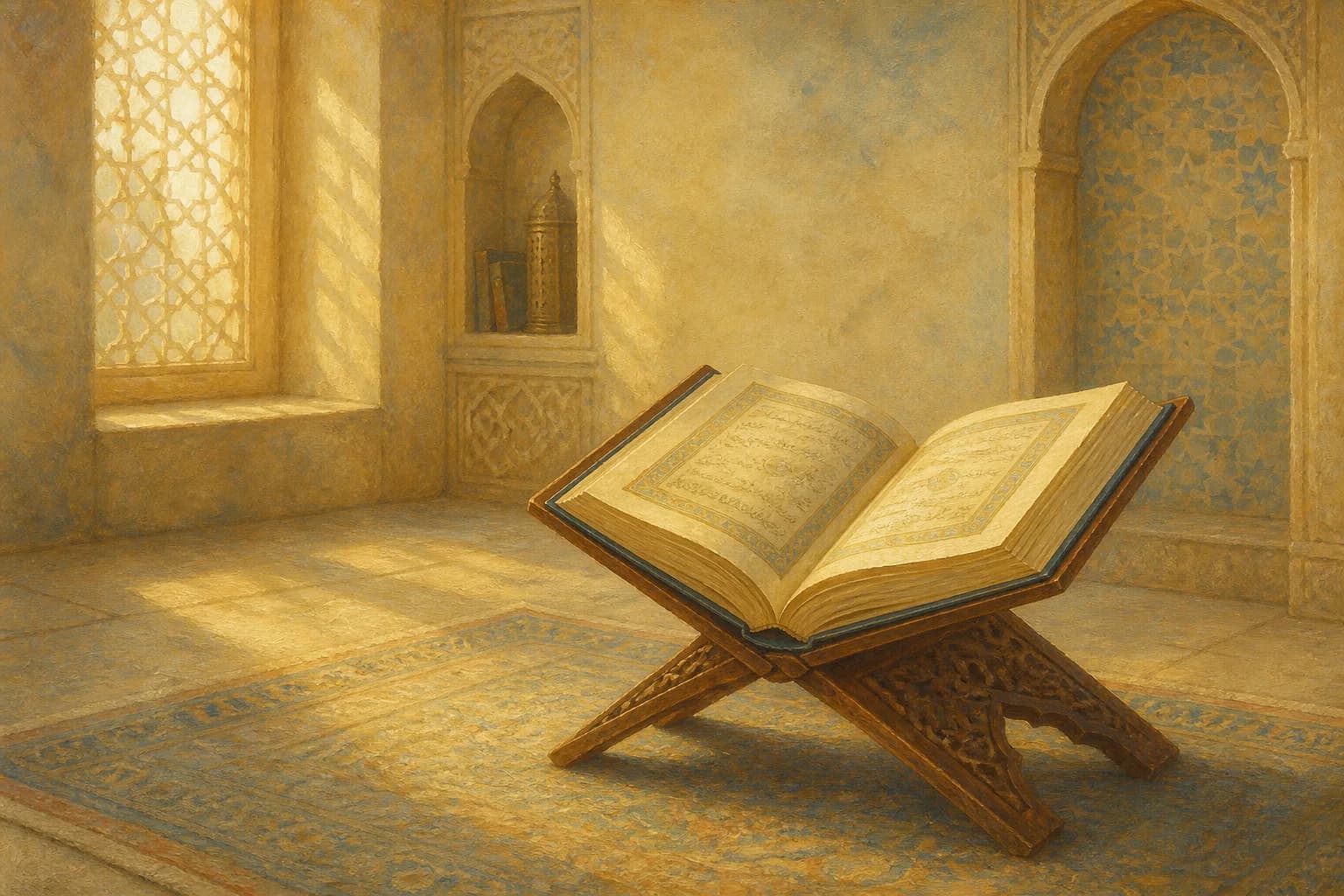

The Two Surahs the Prophet Called the Best Protection
Near the end of his life, the Prophet Muhammad ﷺ said to his companion Uqba ibn Amir:
"Do you not see what was revealed to me tonight? There is nothing like it!"
Then he recited Surah Al-Falaq and Surah An-Nas. (Sahih Muslim 814)
These two surahs — known together as the Muawwidhatain (المعوذتان), meaning "the two that give refuge" — form one of the most distinctive units in the Quran. Short enough to be memorized by children, yet dense enough to carry the full weight of seeking refuge with Allah from every category of harm. Surah Al-Falaq (الفلق), "The Daybreak," is the first of the pair: five verses, twenty-three words, a complete framework for protection.
If you have not made a habit of reciting it regularly, this is worth your attention.
Understanding Surah Al-Falaq Verse by Verse
The full surah appears on quran.com/113. Here is the Arabic with transliteration and meaning:
قُلْ أَعُوذُ بِرَبِّ الْفَلَقِ
Qul a'udhu bi-rabbi'l-falaq
"Say: I seek refuge with the Lord of the Daybreak"
The opening word — Qul (قُلْ), "Say" — is a direct command from Allah to His Prophet, and through him, to every believer. The act of reciting this surah is itself an act of obedience, not merely of self-protection. Al-Falaq (الفلق) means the crack of dawn: the breaking of light from darkness. Allah is being named here as the One who commands that moment, a name that emphasizes His complete authority over creation, time, and all that emerges from the unseen.
مِن شَرِّ مَا خَلَقَ
Min sharri ma khalaq
"From the evil of what He has created"
This is a sweeping refuge. Not from a specific list of harms, but from the evil inherent in anything that exists. Everything Allah created has the potential for harm if it is turned against a person. This verse covers all of it.
وَمِن شَرِّ غَاسِقٍ إِذَا وَقَبَ
Wa min sharri ghasiqin idha waqab
"And from the evil of darkness when it falls"
Ghasiq (غَاسِق) refers to the deep darkness of night. The Arabic scholar Ibn Kathir notes that night is specifically mentioned because it is when harmful creatures are most active, when human guards are lower, and when unseen threats increase. Seeking refuge from the night's darkness is both literal and symbolic — darkness as the condition under which evil finds its opportunities.
وَمِن شَرِّ النَّفَّاثَاتِ فِي الْعُقَدِ
Wa min sharri'n-naffathati fi'l-uqad
"And from the evil of the blowers in knots"
An-naffathat (النَّفَّاثَات) refers to those who blow into knots — a specific reference to those who practice harmful magic or sihr. The Prophet ﷺ was himself affected by a form of magic according to multiple narrations, and these two surahs were revealed as part of his recovery. This verse is not superstition; it is a Quranic acknowledgment that such harms exist, combined with a direct prescription for seeking refuge from them.
وَمِن شَرِّ حَاسِدٍ إِذَا حَسَدَ
Wa min sharri hasidin idha hasad
"And from the evil of an envier when he envies"
Hasad (حَسَد) — envy — is one of the most frequently mentioned spiritual diseases in the Sunnah, and the Quran closes this surah by naming it explicitly. The evil eye ('ayn) is a related concept: the harm that can flow from another's intense gaze, whether out of envy or even admiration without blessing. The Surah does not ask you to live in suspicion of others. It asks you to place your protection with Allah, not with your own vigilance.
Why This Surah Matters for Muslims Today
Envy, harmful intentions, social harm — none of these are features of the past. Every era presents them differently, but the human experience of being harmed by others, deliberately or not, is unchanged. Surah Al-Falaq addresses this without catastrophizing and without asking you to live in fear. It is a brief, daily act of placing yourself under Allah's protection.
The Prophet's practice is instructive. He did not recite these verses only when facing obvious threats. He recited them every morning, every evening, and after every prayer — as a consistent layer of spiritual protection woven into the structure of the day. This was not anxious self-protection. It was rooted awareness: good things come from Allah, and harmful things are kept at bay by Allah.
For Muslims navigating social pressures, family dynamics, or simply the ordinary uncertainty of life, this surah offers a framework that is both theologically grounded and practically usable. Protection is not earned by worrying more — it is sought by turning, consistently, to the One who controls all outcomes.
This connects directly to the broader practice of reading the dua for evil eye protection, which complements what Surah Al-Falaq teaches with specific supplications from the hadith tradition.
How to Apply Surah Al-Falaq Every Day
The Prophet ﷺ gave explicit, consistent guidance on when to recite this surah:
After every prayer: Uqba ibn Amir reported that the Prophet ﷺ instructed him: "Recite Al-Ikhlas, Al-Falaq, and An-Nas after every prayer." (Abu Dawud 1523) Most scholars recommend reciting each once after the five prayers, and three times after Fajr and Maghrib.
In the morning and evening adhkar: These surahs are part of the established morning and evening remembrance. Reciting them three times each morning and evening is one of the most consistently recommended practices in the collections of authentic supplications. The morning adhkar guide and evening adhkar guide both include these surahs in their full sequences.
Before sleeping: Aisha (may Allah be pleased with her) reported that the Prophet ﷺ would cup his hands every night, blow into them, and recite Al-Ikhlas, Al-Falaq, and An-Nas — then wipe his hands over his body as far as he could reach, starting from his head and face. (Sahih Bukhari 5017) He would do this three times.
For protection or ruqyah: When visiting a sick person or for personal spiritual protection, reciting these surahs three times while blowing lightly and wiping over the body follows the prophetic example.
Want the Qur'an to feel easier to understand?
Read with clear contextual insights, revisit the verses that matter to you, and build a steady daily Qur'an habit with DeenUp.
Take the Qur'an Quiz
Practical habit triggers:
- After Fajr prayer, before you put away your prayer mat, recite Al-Falaq and An-Nas three times
- Make it the last thing you say before sleeping — pair it with your sleep dua for a complete bedtime routine
- After every other prayer, recite it once as part of the post-prayer adhkar
If you are learning it for the first time, the surah is only five verses. Most adults memorize it in one or two focused sessions. The transliteration above is enough to get started.
Signs That This Practice Is Taking Root
Building a Quran-based protection habit is subtle. You are not looking for dramatic results — you are building a relationship of consistent reliance on Allah. Some markers that the practice is becoming real:
You notice you reach for these surahs automatically — before sleep, after prayer — without having to remind yourself. The recitation stops feeling like a task and starts feeling like a turning.
You find yourself thinking about the meaning of specific phrases during the day. The concept of ghasiq — the spreading darkness — becomes something you actually reflect on rather than just words you pass through.
You feel a different quality of stillness in the morning when the morning adhkar, including these surahs, is completed before the day fully starts. This is not mystical — it is the fruit of consistent remembrance.
The Ayatul Kursi guide is a natural companion to this surah — both address divine protection and sovereignty, and reciting them together after prayer is a well-attested combination in the Sunnah. And for the broader habit of protection through Quran, see the Surah Al-Ikhlas benefits guide which covers the third surah of the Muawwidhatain trio.
The DeenBack guide on morning dua routines explores how to sequence the Muawwidhatain alongside other morning practices so they feel integrated rather than stacked. And the Demi Manifest piece on post-prayer rituals offers a useful framework for understanding why these brief moments after salah carry such disproportionate weight in the Sunnah.
Common Questions
Is Surah Al-Falaq Makki or Madani? There is scholarly discussion on this point. The majority position is that it is Makki (revealed in Mecca), though some scholars, including Ibn Abbas in certain narrations, considered it Madani. The disagreement does not affect how it is used — its authenticity and canonical status are not in question.
Can I recite it in English if I do not know the Arabic yet? Yes, you can reflect on the meaning in English. But the Sunnah practice — especially for protective recitation and ruqyah — is in Arabic. The Arabic words specifically are what the Prophet ﷺ taught and practiced. Prioritize learning the Arabic while using the English meaning to deepen your understanding.
Does reciting it guarantee nothing will harm me? Seeking refuge is a means, not a guarantee. Allah protects from whom He wills. The practice connects you to divine protection in the way the Prophet ﷺ prescribed — trusting the outcome to Allah while doing what He has instructed. This is tawakkul: reliance on Allah after using the means He has given.
How many times should I recite it each morning? The established practice from the Sunnah is three times in the morning and three times in the evening. After other prayers, once is sufficient, though three times is also acceptable and is the practice reported from some companions.
Is there a specific age when children should learn it? There is no fixed age, but Surah Al-Falaq is one of the surahs traditionally taught early because of its brevity and its foundational importance. Many scholars recommend teaching it alongside Al-Fatiha and Al-Ikhlas as part of a child's earliest Quran education.
Closing
Five verses. Twenty-three words. A complete act of turning to Allah.
Surah Al-Falaq has been part of the Muslim morning since the time of the Prophet ﷺ — not because Muslims lived in a more dangerous world, but because the practice of seeking refuge with the Lord of the Daybreak is itself an act of worship, of gratitude, and of alignment. You are acknowledging that your protection does not come from your own strength. It comes from the One who made the dawn.
Start with the morning. Recite it three times tomorrow after Fajr. Then again in the evening. Within a week, you will not need to think about whether to say it — it will simply be part of how your day begins and ends.
Want the Qur'an to feel easier to understand?
Read with clear contextual insights, revisit the verses that matter to you, and build a steady daily Qur'an habit with DeenUp.
Take the Qur'an QuizFrequently Asked Questions
What is Surah Al-Falaq about?
Surah Al-Falaq is the 113th chapter of the Quran. It teaches Muslims to seek refuge with Allah from all created evil, the darkness of night, harmful magic, and the destruction caused by envy.
When should I recite Surah Al-Falaq?
The Prophet recited it every morning and evening, before sleeping, and after every prayer. Reciting it three times in the morning and evening is especially recommended in the Sunnah.
What are the benefits of reciting Surah Al-Falaq daily?
The Prophet called it one of the best means of protection ever sought. Regular recitation shields against evil eye, harmful intentions, and unseen harms, and brings consistent connection with divine protection.
Can Surah Al-Falaq be recited as ruqyah?
Yes. Surah Al-Falaq, along with Surah An-Nas and Ayatul Kursi, is among the Quranic verses used for ruqyah — recitation for spiritual healing and protection, authenticated by the practice of the Prophet.