

- Authors

- Name
- Ahmad
- Role
- Senior Marketing Manager, Islamic education • DeenUp
بِسْمِ اللهِ الرَّحْمٰنِ الرَّحِيْمِ
In the name of God, the Most Gracious, the Most Merciful.
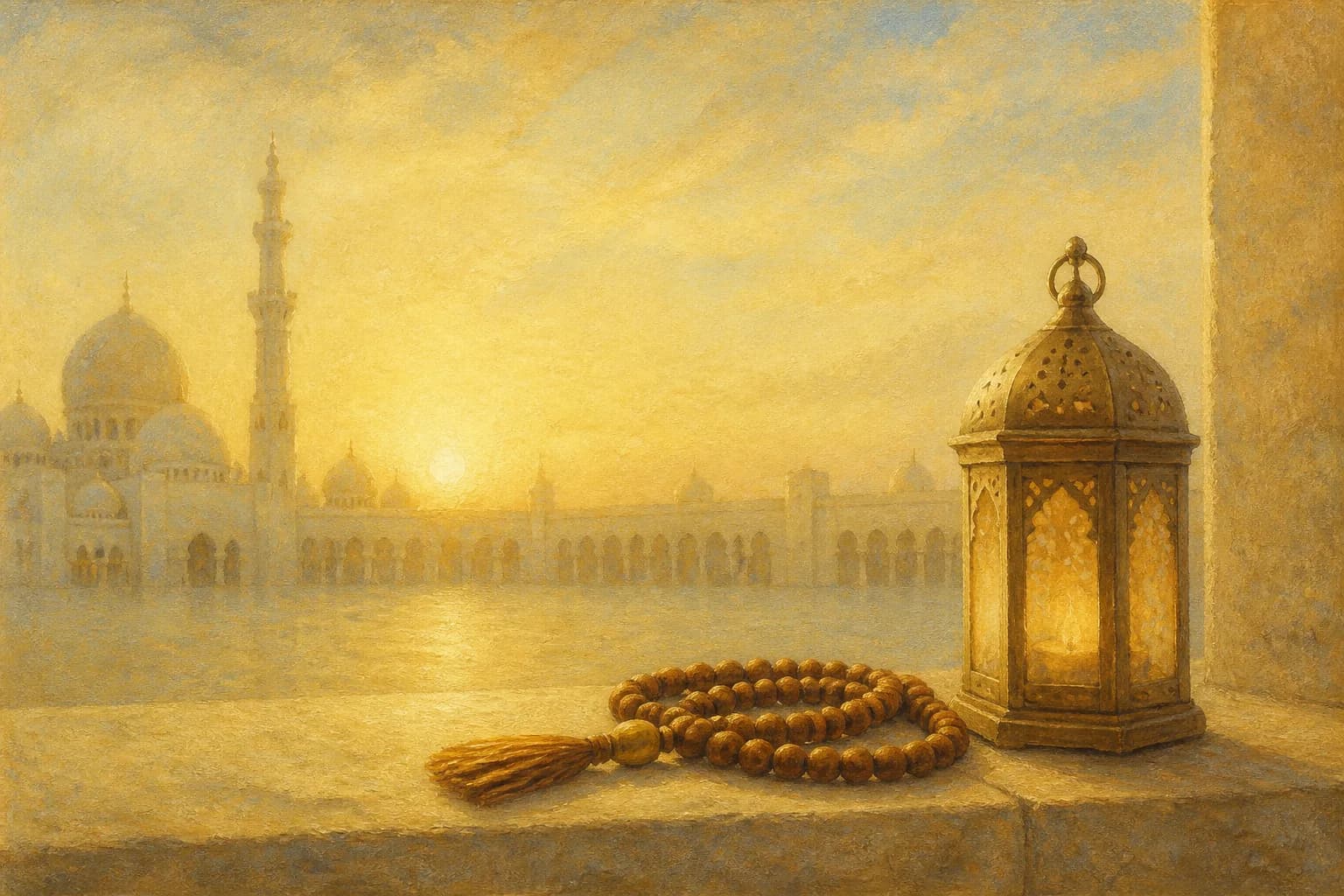

There are gaps in every day — just after Fajr when the world is still quiet, brief pauses between tasks, the moment before sleep when the mind settles. In those windows, the tongue is free. Daily dhikr (ذِكْر) — the remembrance of Allah — does not require a dedicated hour or a secluded prayer room. It fits into the texture of life as it already exists.
The Prophet ﷺ described the one who remembers Allah and the one who does not as the living and the dead (Sahih al-Bukhari 6407). That framing cuts through any idea that dhikr is an optional extra. It is the thread that keeps a believer spiritually alive through an ordinary day.
What Is Daily Dhikr in Islam?
Daily dhikr is the practice of remembering Allah throughout the day using specific authenticated formulas and supplications. It encompasses morning adhkar after Fajr, post-prayer remembrance, evening adhkar after Asr, and brief phrases woven into everyday moments. The Prophet ﷺ said the best dhikr is La ilaha illallah — "There is no god but Allah" — (Sunan al-Tirmidhi 3383), and the Quran states the outcome plainly: "Verily, in the remembrance of Allah do hearts find rest" (Surah Ar-Ra'd, 13:28).
The Four Core Daily Dhikr Formulas
These phrases form the backbone of any daily dhikr practice and appear in multiple authenticated hadiths:
| Arabic | Transliteration | Translation | When to Use |
|---|---|---|---|
| سُبْحَانَ اللَّهِ | SubhanAllah | Glory be to Allah | 33x after every prayer |
| الْحَمْدُ لِلَّهِ | Alhamdulillah | All praise is for Allah | 33x after every prayer |
| اللَّهُ أَكْبَرُ | Allahu Akbar | Allah is Greatest | 33x after every prayer |
| لَا إِلَهَ إِلَّا اللَّهُ | La ilaha illallah | There is no god but Allah | Complete to 100 after prayer |
After every prayer, the Prophet ﷺ taught saying SubhanAllah 33 times, Alhamdulillah 33 times, and Allahu Akbar 33 times, then completing the hundred with:
لَا إِلَهَ إِلَّا اللَّهُ وَحْدَهُ لَا شَرِيكَ لَهُ، لَهُ الْمُلْكُ وَلَهُ الْحَمْدُ وَهُوَ عَلَى كُلِّ شَيْءٍ قَدِيرٌ
"There is no god but Allah alone, with no partner. His is the dominion and His is all praise, and He is over all things capable." — (Sahih Muslim 597)
Performing this after each of the five daily prayers means at least 500 dhikr phrases daily without adding a single extra session to your routine.
Why the Quran Calls for Much Remembrance
The Quran addresses believers directly: "O you who believe, remember Allah with much remembrance, and glorify Him morning and evening" (Surah Al-Ahzab, 33:41-42). The Arabic dhikran kathiran — "much remembrance" — does not specify a count. It describes a quality of continuous orientation toward Allah throughout the day.
Scholars explain that dhikr is not a performance for times of formal worship only. When you say Bismillah before eating, Alhamdulillah when something goes well, Astaghfirullah when you slip — you are doing dhikr. The goal of the structured daily dhikr practice is to build the habit so these moments become reflexive rather than occasional.
How to Structure Your Daily Dhikr
Morning Adhkar: After Fajr Until Sunrise
The morning adhkar set the spiritual tone for the entire day. Among the most important is Sayyidul Istighfar:
اللَّهُمَّ أَنْتَ رَبِّي لَا إِلَهَ إِلَّا أَنْتَ، خَلَقْتَنِي وَأَنَا عَبْدُكَ
"O Allah, You are my Lord. There is no god but You. You created me and I am Your servant." — (Sahih al-Bukhari 6306)
The Prophet ﷺ said that whoever says this in the morning with conviction and dies that day will enter Jannah. The morning adhkar also include protective formulas, affirmations of tawhid, and supplications for the day ahead.
Our guide to morning adhkar in Islam covers the full authenticated set with Arabic, transliteration, and when to recite each.
Post-Prayer Dhikr: After Each of the Five Prayers
The 33-33-33-1 formula is the core. The Prophet ﷺ also recommended 100 repetitions of SubhanAllahu wa bihamdihi (Sahih al-Bukhari 6405), which he said erases sins as numerous as sea foam. Our dhikr after salah guide covers additional post-prayer formulas.
Evening Adhkar: After Asr Until Maghrib
The evening adhkar mirror the morning set and include specific supplications for seeking protection through the night. They close the day's spiritual cycle. Our evening adhkar in Islam guide has the full authenticated set.

Keep learning your deen with short, sourced lessons in DeenUp.
Situational Dhikr for Everyday Moments
Daily dhikr extends beyond the three main windows. These brief phrases cover common daily situations:
| Situation | Dhikr | Source |
|---|---|---|
| Starting anything | Bismillah | Ibn Majah 2117 |
| Before sleeping | 33x SubhanAllah, 33x Alhamdulillah, 34x Allahu Akbar | Sahih al-Bukhari 3113 |
| Feeling worried | La hawla wa la quwwata illa billah | Sahih al-Bukhari 7386 |
| Entering home | Bismillah wa ala Allahi tawakkalna | Abu Dawud 5096 |
| Upon completing something | Alhamdulillah | Various |
For deeper context on each of these, our overview of the importance of dhikr connects each practice to its Quranic and prophetic basis. Our benefits of istighfar guide covers one of the most significant single dhikr practices in depth.
For a practical approach to building the daily dhikr habit, the DeenBack guide to daily dhikr habits offers a structured week-by-week plan. The Demi Manifest piece on post-prayer rituals explores how anchoring daily life to post-prayer moments reshapes the spiritual texture of the entire day.
For the authentic hadith sources cited throughout this guide, Sunnah.com provides the full verified collections. For Quranic references, Quran.com offers the complete Arabic with multiple translations.
Building the Routine: From Intention to Consistency
The most common barrier to daily dhikr is not lack of intention — it is forgetting. Good intentions do not survive a busy morning without structure.
Anchor dhikr to what you already do. You already pray five times a day. The post-prayer dhikr requires no new time slot — it attaches to an existing habit. This is the easiest entry point for anyone building from nothing.
Start with one window. Implementing morning adhkar, post-prayer dhikr, and evening adhkar all at once is genuinely difficult. Choose one, do it every day for 30 days, let it stabilize, then add the next.
Use a physical or digital counter. The mental effort of counting while also maintaining presence undermines the dhikr itself. A tasbih (prayer beads) or a dhikr counter removes that friction. Many Muslims find that removing the counting burden is the single change that makes their post-prayer dhikr consistent.
Our guide to how to build Islamic habits applies these same principles to salah, fasting, Quran reading, and other daily practices — worth reading alongside this guide.
Common Questions About Daily Dhikr
Do I need to be in a quiet place? No. Ibn al-Jawzi wrote that a believer in a crowded marketplace who remembers Allah earns a particular reward — the striving itself against distraction is recognized. Dhikr works in traffic, in the kitchen, while walking.
What if I miss a session? Do not try to double up or "make it up." That mindset treats dhikr as a quota. Resume at the next natural window and continue. Regularity over time matters far more than catching up after a missed session.
Is silent dhikr valid? Yes. Both voiced and silent dhikr are valid. Some scholars consider silent dhikr especially valuable for sincerity, since no one else observes it. In contexts where voiced dhikr is impractical, silent dhikr is fully acceptable.
What if I lose count? Default to a lower number you are certain you reached. Some scholars say the intent matters more than the precise count. If your tongue is moving and your heart is present, the dhikr has value regardless of the exact total.
Keep learning your deen with short, sourced lessons in DeenUp.
Frequently Asked Questions
What is daily dhikr in Islam?
Daily dhikr is the ongoing practice of remembering Allah through specific authenticated words and phrases throughout the day. It covers morning adhkar after Fajr, post-prayer remembrance, evening adhkar after Asr, and situational formulas. The Prophet said the best dhikr is La ilaha illallah (Sunan al-Tirmidhi 3383).
What are the most important dhikr phrases to say each day?
The core daily dhikr phrases are SubhanAllah, Alhamdulillah, La ilaha illallah, and Allahu Akbar. After each prayer, saying each of the first three 33 times is a confirmed sunnah (Sahih Muslim 597). These phrases are described in hadith as among the most beloved words to Allah.
How many times should I repeat dhikr each day?
The sunnah is 33 repetitions of SubhanAllah, 33 of Alhamdulillah, and 33 of Allahu Akbar after every prayer, completed to 100 with La ilaha illallah (Sahih Muslim 597). Morning and evening adhkar are performed once per full set — consistency matters more than a high count.
Do I need wudu to perform dhikr?
No. Dhikr does not require wudu. You can remember Allah while walking, working, resting, or lying down. The Prophet remembered Allah at all times without restriction (Sahih al-Bukhari 7408). This makes dhikr uniquely accessible throughout any busy schedule.
What is the best time for daily dhikr?
Morning adhkar are performed after Fajr through sunrise. Evening adhkar begin after Asr and continue through Maghrib. Post-prayer dhikr follows each of the five daily prayers. Bedtime dhikr closes the day. Consistent timing turns dhikr into a natural daily rhythm rather than an irregular effort.
Can daily dhikr really change the heart?
Yes. The Quran states: 'Verily, in the remembrance of Allah do hearts find rest' (Surah Ar-Ra'd, 13:28). Scholars explain that regular dhikr softens the heart, reduces anxiety, and cultivates a lasting awareness of Allah through ordinary moments — effects that deepen with consistent practice.
How do I start a daily dhikr routine from scratch?
Begin with three anchors: morning adhkar after Fajr, post-prayer dhikr of 33-33-33, and evening adhkar after Asr. Commit to only these three for 30 days before expanding. A dhikr counter or reminder app helps remove the cognitive load of counting in the early stages.