

- Authors

- Name
- Ahmad
- Role
- Senior Marketing Manager, Islamic education • DeenUp
بِسْمِ اللهِ الرَّحْمٰنِ الرَّحِيْمِ
In the name of God, the Most Gracious, the Most Merciful.
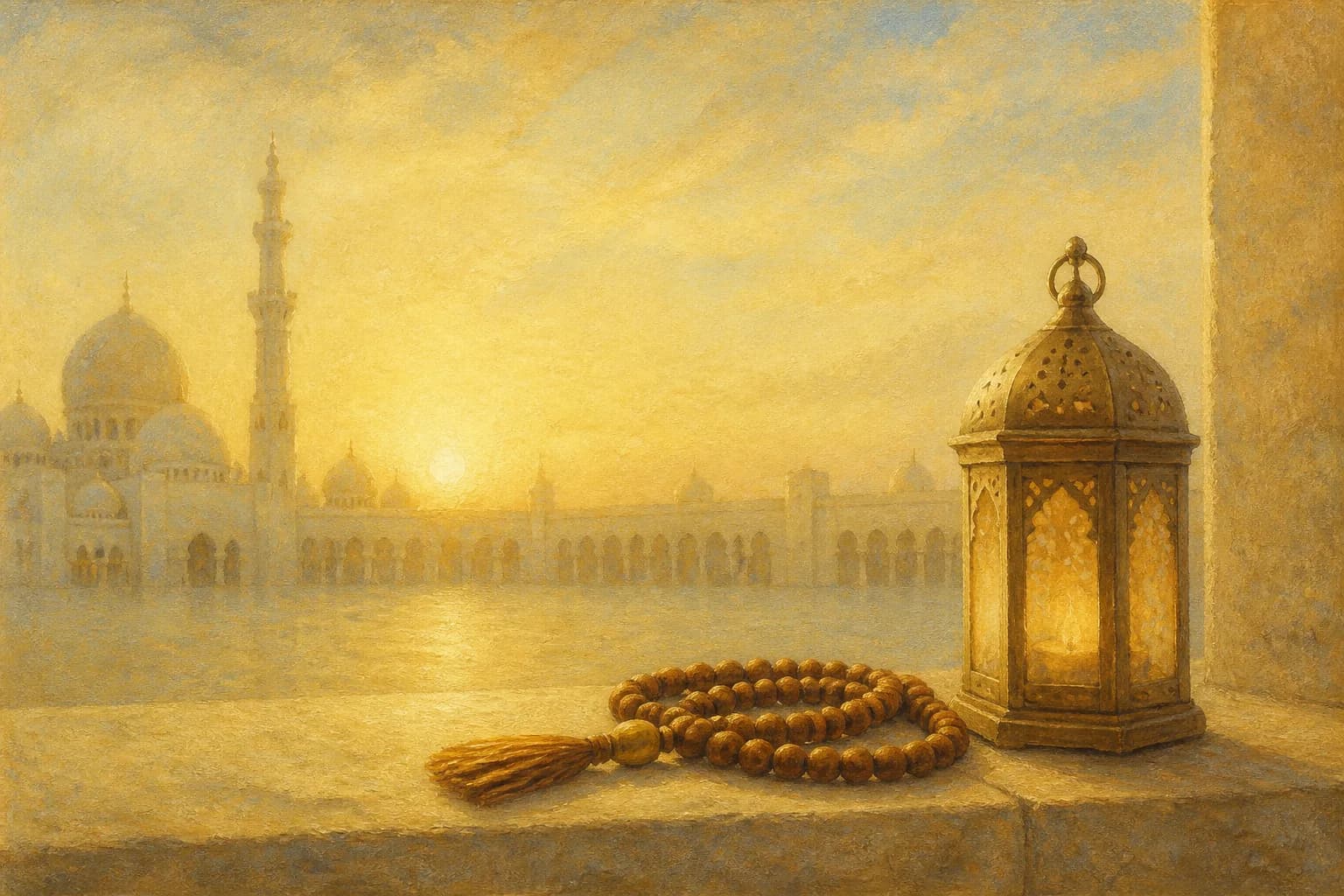

The Quran describes true believers as those who remember Allah "standing, sitting, and on their sides" (Surah Al-Imran, 3:191) — but the Islamic tradition does not leave that remembrance vague. The Prophet ﷺ structured it. Morning and evening become the bookends of the Muslim day, each marked by specific supplications that anchor the heart in its proper orientation before the world takes over.
The evening azkar (أَذْكَار) — the recommended remembrances for the close of the day — are not a practice of the particularly devout. They are a prophetic prescription, authenticated through multiple chains of transmission, designed for the exact moment when a person is most likely to feel the accumulated weight of everything the day brought.
What Are the Evening Azkar?
The evening azkar (أَذْكَار) are a set of verified supplications and remembrances from the Quran and authentic hadith, recommended by the Prophet ﷺ for recitation after Asr prayer until sunset. They include Ayatul Kursi, the three Quls (Surah Al-Ikhlas, Al-Falaq, and An-Nas), Sayyidul Istighfar, specific protection duas, and phrases of tasbih. Together they form a structured act of worship that takes 10–15 minutes and functions as both protection and spiritual reset at the close of the active day.
What Does the Quran Say About Evening Remembrance?
The Quran calls to remembrance at the bookends of the day by name. Allah commands: "Exalt in the praise of your Lord before the rising of the sun and before its setting." (Surah Ta-Ha, 20:130) This is not metaphorical — it is a structural instruction. The Islamic day has a morning opening and an evening close, both anchored in the conscious remembrance of Allah.
The Prophet ﷺ was explicit about the evening azkar's protective purpose. He said: "Whoever says 'I seek refuge in the perfect words of Allah from the evil of what He created' (A'udhu bikalimatillahit-tammati min sharri ma khalaq) three times in the evening will not be harmed by anything that night." (Sahih Muslim 2709) The protection being offered is direct and specific — attached to a verified act at a verified time.
The word azkar itself comes from the Arabic root ذ-ك-ر (dhikr), meaning to remember or mention. The plural azkar refers to the collected acts of remembrance. In Islamic literature, adhkar and azkar are the same word in two transliterations of أَذْكَار — there is no religious difference between the terms.
What Are the Core Evening Azkar to Recite?
The scholars of hadith collected the evening azkar primarily from Abu Dawud, Tirmidhi, and Ibn Majah, with many chains traced back to the major sahih collections. The established core includes:
1. Ayatul Kursi — once
اللَّهُ لَا إِلَٰهَ إِلَّا هُوَ الْحَيُّ الْقَيُّومُ...
Allahu la ilaha illa huwal-hayyul-qayyum...
(Surah Al-Baqarah, 2:255)
The Prophet ﷺ said that whoever recites Ayatul Kursi in the evening will be protected by Allah until morning, with no shaytan approaching (Sahih al-Bukhari, Book of Virtues of the Quran). It is the single most affirmed protective recitation in the Sunnah.
2. The Three Quls — three times each
Surah Al-Ikhlas (112), Surah Al-Falaq (113), and Surah An-Nas (114). The Prophet ﷺ would blow into his palms after reciting and wipe over his body. He described these three surahs as sufficient for protection from every harm when recited morning and evening. (Abu Dawud 5082)
3. Sayyidul Istighfar — once
اللَّهُمَّ أَنْتَ رَبِّي لَا إِلَهَ إِلَّا أَنْتَ خَلَقْتَنِي وَأَنَا عَبْدُكَ
Allahumma anta rabbi la ilaha illa anta khalaqtani wa ana abduka...
The Prophet ﷺ said: "Whoever says Sayyidul Istighfar with certainty during the day and dies before evening, or during the night and dies before morning, will be among the people of Paradise." (Sahih al-Bukhari 6306) It is the master supplication of forgiveness.
4. Seeking refuge in Allah's perfect words — three times
أَعُوذُ بِكَلِمَاتِ اللَّهِ التَّامَّاتِ مِنْ شَرِّ مَا خَلَقَ
A'udhu bikalimatillahit-tammati min sharri ma khalaq
"I seek refuge in the perfect words of Allah from the evil of what He has created." — (Sahih Muslim 2709)
5. Evening tasbih
SubhanAllah 33 times, Alhamdulillah 33 times, Allahu Akbar 34 times. (Sahih Muslim 597)
Why Do the Evening Azkar Matter for Modern Muslims?
The evening is when the day's emotions, decisions, and regrets tend to surface. Anxiety about what was left undone. Frustration about what went wrong. The mind runs through what tomorrow requires. The evening azkar interrupt that loop with something concrete: a set of verified acts of worship that shift the focus from the self's anxiety to Allah's provision and protection.
This is not a technique borrowed from elsewhere and given Islamic framing. The structure comes from the prophetic tradition itself — a daily ritual close designed to seal the day with acknowledgment of Allah's power, gratitude for His protection, and honest return to Him through istighfar.
The practice connects to a deeper principle. Allah says: "Verily, in the remembrance of Allah do hearts find rest." (Surah Ar-Ra'd, 13:28) That rest is not passive. It is built through specific acts, at specific times, that the Prophet ﷺ modeled and taught in detail. The evening azkar are one of the clearest examples of that structure.
| Azkar | Arabic Opening | Timing | Hadith Source |
|---|---|---|---|
| Ayatul Kursi | اللَّهُ لَا إِلَٰهَ إِلَّا هُوَ | After Asr, before Maghrib | Sahih al-Bukhari |
| Three Quls (×3) | قُلْ هُوَ اللَّهُ أَحَدٌ | After Asr | Abu Dawud 5082 |
| Sayyidul Istighfar | اللَّهُمَّ أَنْتَ رَبِّي | Before sunset | Sahih al-Bukhari 6306 |
| A'udhu bikalimat (×3) | أَعُوذُ بِكَلِمَاتِ اللَّهِ | After Asr | Sahih Muslim 2709 |
| Evening tasbih | سُبْحَانَ اللَّهِ (×33) | After Asr prayer | Sahih Muslim 597 |
How to Build a Consistent Evening Azkar Practice
The difference between Muslims who maintain the evening azkar and those who let them slip is almost always structural rather than motivational. Motivation fluctuates with the day. Structure does not.
Attach the azkar to your Asr prayer. The moment you finish Asr, begin the azkar before you check your phone or turn to anything else. The prayer already has your attention and orientation — the azkar are its natural continuation. The transition from salah to azkar requires no additional mental activation; it simply continues.
Keep a written reference nearby. The Hisnul Muslim (Fortress of the Muslim) is the most widely used authenticated collection of morning and evening azkar. Having a physical copy near your prayer space removes the friction of wondering what to recite. Many Muslims also keep a digital copy for situations outside the home.
Start with the core three. If the full set feels overwhelming, begin with Ayatul Kursi, the three Quls, and Sayyidul Istighfar. These three alone cover the major categories of evening remembrance: protection, submission to Allah's oneness, and seeking forgiveness. Build from there over weeks, not days.
Your evening adhkar in Islam guide covers the full list in more detail, and the morning adhkar in Islam are the natural complement — together forming the prophetic rhythm that frames the Muslim day. For the broader context of why consistent remembrance transforms the heart over time, the importance of dhikr explains the spiritual mechanism behind these practices.
The DeenBack daily dhikr habits guide provides practical frameworks for weaving remembrance into the specific textures of modern life — including the post-Asr window that tends to be difficult to protect from other demands. And the Demi Manifest reflection on barakah in the home explores how family-level practices around evening remembrance shape the spiritual atmosphere of the household across generations.

Keep learning your deen with short, sourced lessons in DeenUp.
How Do You Know the Evening Azkar Are Working?
The signs of a working azkar practice are not dramatic. They are quiet.
You notice that the transition from the day to the evening feels different — less abrupt, less caught in whatever the last hour brought. The act of sitting for azkar becomes a reliable reset point. The Arabic words begin to mean something beyond their translations; they become familiar landmarks in a changing day. Over time, missing the evening azkar creates a noticeable absence.
That noticing is itself a sign that something has taken root.
Common Questions About the Evening Azkar
Do the evening azkar have to be recited in a specific order? There is no required sequence for the evening azkar as a set. Each act has its own recommendation, but you are not bound to a particular order. Most scholars and collections begin with Ayatul Kursi or the three Quls, which creates a natural flow into the longer supplications.
Can I read the azkar while sitting on the couch or at my desk? Yes — there is no required physical position for the evening azkar. However, facing the qiblah and being seated mindfully supports concentration. The key is intentionality: these are not background recitations but deliberate acts of worship.
What if I fall asleep before completing the evening azkar? If sleep overtakes you mid-azkar, scholars say your intention counts and you are not penalized for what sleep interrupted. Reciting the core azkar immediately after Asr — rather than saving them for just before bed — prevents this entirely.
Are the morning and evening azkar the same? They overlap significantly, but the evening azkar include additional duas for nighttime protection and end slightly differently. The duas to read after salah covers what to recite in the immediate post-prayer moments, which feeds naturally into the full evening azkar set.
Is "azkar" different from "adhkar"? No — they are two transliterations of the same Arabic word أَذْكَار. Both refer to the same practice. You will encounter both spellings in Islamic literature without any difference in meaning or practice.
Begin the Evening Routine That Changes the Night
The evening azkar are one of the most accessible and high-return practices in the prophetic tradition. They take fifteen minutes and offer protection, forgiveness, and a conscious closing of the day in Allah's name. That is not an ordinary combination.
The habit starts with one evening — one commitment to stay on the prayer mat until Ayatul Kursi, the three Quls, and Sayyidul Istighfar are complete. From that foundation, the rest builds naturally, one remembrance at a time.
Keep learning your deen with short, sourced lessons in DeenUp.
Frequently Asked Questions
What are the evening azkar in Islam?
The evening azkar (أَذْكَار) are a set of supplications and remembrances from the Quran and authentic hadith that the Prophet ﷺ recommended reciting after Asr prayer until sunset. They include Ayatul Kursi, the three Quls, Sayyidul Istighfar, and specific protection duas — taking around 10 to 15 minutes when done attentively.
When should I read the evening azkar?
The scholars recommend beginning the evening azkar after Asr prayer and completing them before Maghrib. The hadith use the phrase 'when you enter the evening' (Sahih Muslim 2723), which scholars interpret as the period from Asr until sunset. Starting right after completing Asr is the most established and consistent approach.
What is the most important act in the evening azkar?
Ayatul Kursi (Surah Al-Baqarah, 2:255) holds a central place in the evening azkar. The Prophet ﷺ reported that whoever recites it in the evening will be protected by Allah until morning (Sahih al-Bukhari). It is one of the most affirmed single acts of protection in the Sunnah and takes under a minute to recite.
How long does reading the evening azkar take?
A complete reading of the authenticated evening azkar takes between 10 and 20 minutes, depending on pace. The core set — Ayatul Kursi, the three Quls three times each, Sayyidul Istighfar, and the key protection duas — can be covered in about 10 minutes with focused attention. Slower, reflective recitation takes longer.
What is the difference between azkar and adhkar?
Azkar and adhkar are two English transliterations of the same Arabic plural (أَذْكَار) of the word dhikr (ذِكْر), meaning remembrance of Allah. There is no religious difference — both refer to the same collection of supplications and remembrances. Azkar follows one transliteration convention; adhkar follows another. The practice is identical.
Can I read the evening azkar in English?
You may make dua in any language, and Allah hears all. However, the specific azkar texts carry the weight of authenticated prophetic wording. Scholars recommend reciting them in Arabic while understanding the meaning, then supplementing with personal supplication in your own language. Learning a few lines at a time is a practical starting approach.
What if I forget to read the evening azkar?
If you miss the evening azkar, you can still recite them after Maghrib with the intention of making them up, though the optimal time has passed. Missing them occasionally is not a cause for distress. The Prophet ﷺ described these azkar as protection — building a consistent habit matters more than perfect adherence from the first day.