

- Authors

- Name
- Ahmad
- Role
- Senior Marketing Manager, Islamic education • DeenUp
بِسْمِ اللهِ الرَّحْمٰنِ الرَّحِيْمِ
In the name of God, the Most Gracious, the Most Merciful.
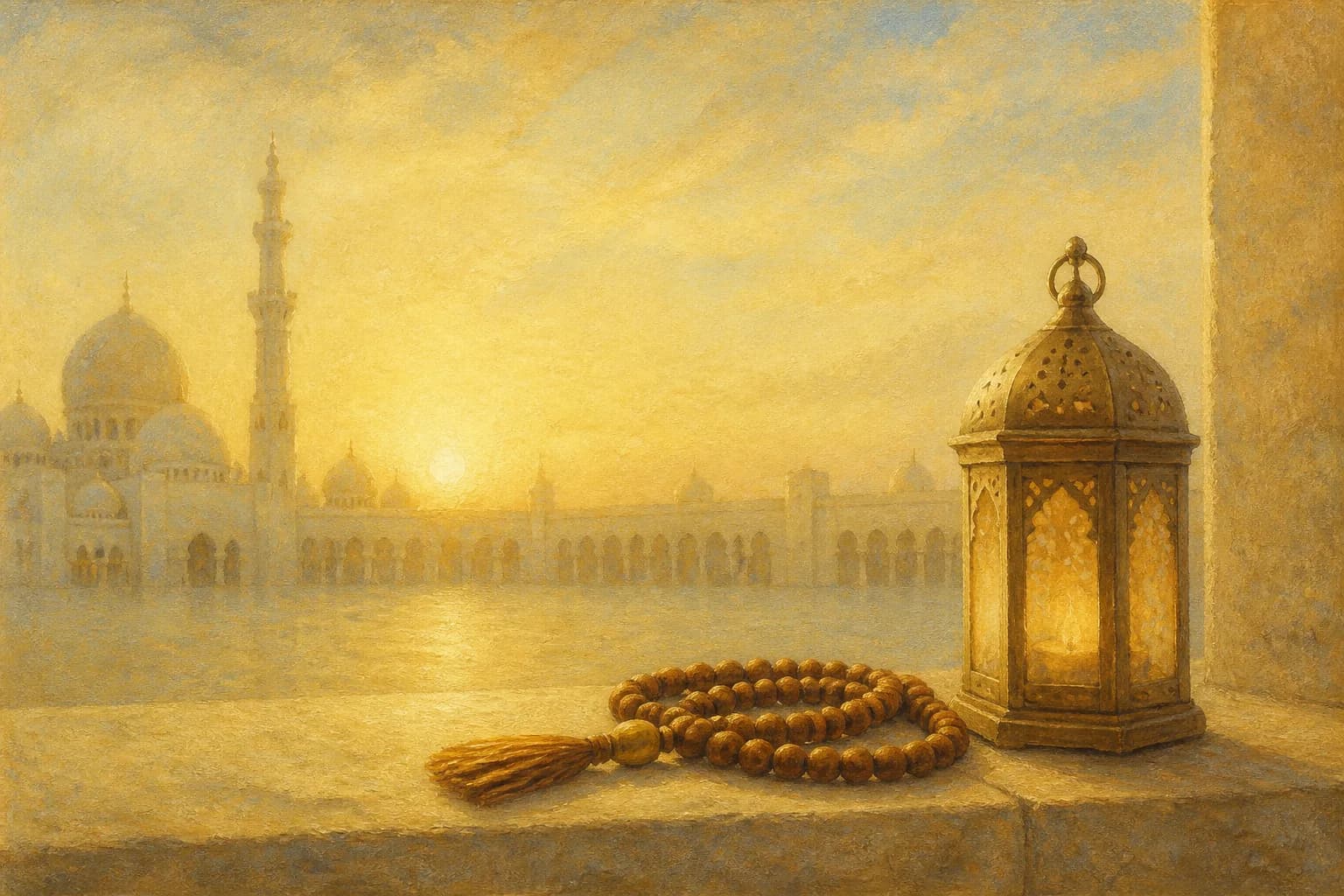

The hours between Asr and Maghrib hold a quiet intensity. The day is winding down, distractions multiply, and that sacred window slips by before you notice. Yet the Prophet ﷺ protected this time with specific supplications that scholars have preserved across generations. These evening duas are not simply tradition — they are a practical spiritual shield and a conscious reset between the activity of the day and the stillness of the night.
What Is the Evening Dua in Islam?
The Islamic evening dua (أذكار المساء adhkār al-masā') is a set of supplications and remembrances recommended after Asr prayer through sunset. The Prophet ﷺ taught a specific collection of evening adhkar preserved across the authentic hadith collections of Bukhari, Muslim, Abu Dawud, and Tirmidhi. These duas seek Allah's protection from harm, acknowledge His lordship over life and death, and spiritually orient the believer before night descends.
The Core Evening Duas from the Sunnah
Opening the Evening with Gratitude
Begin the evening adhkar with this supplication, recorded in Sunan Abu Dawud (5068) and Tirmidhi (3391):
اللَّهُمَّ بِكَ أَمْسَيْنَا وَبِكَ أَصْبَحْنَا وَبِكَ نَحْيَا وَبِكَ نَمُوتُ وَإِلَيْكَ الْمَصِيرُ
Allāhumma bika amsaynā wa bika aṣbaḥnā wa bika naḥyā wa bika namūtu wa ilayka-l-maṣīr
"O Allah, by You we enter the evening, by You we enter the morning, by You we live, by You we die, and to You is our return."
This single sentence encapsulates tawakkul — complete reliance on Allah — acknowledged once at the opening of the evening adhkar.
Seeking Refuge from All Harm (×3)
أَعُوذُ بِكَلِمَاتِ اللَّهِ التَّامَّاتِ مِنْ شَرِّ مَا خَلَقَ
A'ūdhu bi kalimātillāhit-tāmmāti min sharri mā khalaq
"I seek refuge in the complete words of Allah from the evil of what He created." — Sahih Muslim 2709
Recite this three times each evening. The Prophet ﷺ said whoever says it will not be harmed by anything until morning — a direct promise of protection from the most authenticated hadith collection. The Quran calls Allah's words complete and perfect (Surah Al-An'am, 6:115), making this supplication a declaration of faith as much as a request.
The Name of Allah as a Shield (×3)
بِسْمِ اللَّهِ الَّذِي لَا يَضُرُّ مَعَ اسْمِهِ شَيْءٌ فِي الأَرْضِ وَلَا فِي السَّمَاءِ وَهُوَ السَّمِيعُ الْعَلِيمُ
Bismillāhil-ladhī lā yaḍurru ma'a ismihi shay'un fil-arḍi wa lā fis-samā'i wa huwas-samī'ul-'alīm
"In the name of Allah, with Whose name nothing on earth or in heaven can cause harm, and He is the All-Hearing, All-Knowing." — Sunan Abu Dawud 5088, Tirmidhi 3388
Recite three times morning and evening. The Prophet ﷺ said that whoever does so will not be struck by sudden calamity until the next morning or evening respectively. Its brevity makes it one of the easiest two-minute habits to sustain.
Ayatul Kursi — the Verse of the Throne
Surah Al-Baqarah (2:255) is the sayyid (master) of all Quranic verses. Recite it once in the evening, before or just after Isha. The Prophet ﷺ confirmed that a guardian angel remains with whoever recites it before sleeping, protecting them until morning (Sahih al-Bukhari). No evening adhkar routine is complete without it.
The Last Two Verses of Surah Al-Baqarah
"Whoever recites the last two verses of Surah Al-Baqarah at night, they will suffice him." (Sahih al-Bukhari 5009, Sahih Muslim 808). Verses 285–286 carry a declaration of faith followed by a supplication for forgiveness, mercy, and victory over disbelief. Reading them each evening is a sunnah with a specific, verified promise attached to it.
Evening Adhkar Quick-Reference Table
| Dua | How Many Times | Source |
|---|---|---|
| Allāhumma bika amsaynā | 1× (opening) | Abu Dawud 5068 |
| A'udhu bi kalimatillah | 3× | Sahih Muslim 2709 |
| Bismillahil-ladhi la yadurru | 3× | Abu Dawud 5088 |
| Ayatul Kursi (2:255) | 1× | Sahih al-Bukhari |
| Last 2 verses of Al-Baqarah (2:285–286) | 1× | Sahih al-Bukhari 5009 |
| Sayyidul Istighfar | 1× | Sahih al-Bukhari 6306 |
| SubhanAllah ×33, Alhamdulillah ×33, Allahu Akbar ×34 | 1 set | Sahih al-Bukhari 3113 |
The full evening adhkar in Islam takes 10–15 minutes; these core duas can be completed in five.
Why Does Allah Command Evening Remembrance?
The Quran directly instructs this practice: "So glorify the praises of your Lord before the rising of the sun and before its setting" (Surah Qaf, 50:39). This is not an optional extra — the verse links tasbih (glorification) to the rhythm of the natural world itself, a twice-daily recalibration built into creation.
Ibn Al-Qayyim (rahimahullah) wrote that the morning and evening adhkar function like armor for the soul: leaving the house without them is like going to battle without a shield. The protection they offer is spiritual as much as metaphysical — they reorient the heart toward Allah at the two pivots of the day.
Compare this to morning adhkar in Islam: both sets share a similar structure but use distinct wording (aṣbaḥnā for morning, amsaynā for evening). Each set is anchored to its specific time and cannot substitute for the other.
Making Evening Dua a Daily Habit
Consistency matters more than length. Here is how to build the habit without it feeling burdensome:
- Anchor it to Asr. As soon as you complete the Asr prayer, move directly into the evening adhkar. The transition from salah to dhikr is natural and reduces the chance of forgetting.
- Start with three. If the full set feels daunting at first, begin with just the two protection duas recited three times each. Add one more each week until the full set feels effortless.
- Save Ayatul Kursi for bedtime. Some scholars place it in the pre-sleep sunnah. Either time is valid; bedtime is usually the easiest anchor point to remember.
- Set a gentle notification. A quiet reminder just after Asr bridges the gap between intention and action on busy weekdays.
Understanding the importance of dhikr in Islamic spirituality makes these habits more meaningful — regular remembrance is what keeps the heart alive between prayers.

Keep learning your deen with short, sourced lessons in DeenUp.
Sealing the Evening with Repentance
A powerful way to close the evening adhkar is Sayyidul Istighfar — the master supplication of seeking forgiveness. The Prophet ﷺ called it the greatest form of istighfar:
اللَّهُمَّ أَنْتَ رَبِّي لَا إِلَهَ إِلَّا أَنْتَ خَلَقْتَنِي وَأَنَا عَبْدُكَ وَأَنَا عَلَى عَهْدِكَ وَوَعْدِكَ مَا اسْتَطَعْتُ أَعُوذُ بِكَ مِنْ شَرِّ مَا صَنَعْتُ أَبُوءُ لَكَ بِنِعْمَتِكَ عَلَيَّ وَأَبُوءُ بِذَنْبِي فَاغْفِرْ لِي فَإِنَّهُ لَا يَغْفِرُ الذُّنُوبَ إِلَّا أَنْتَ
"O Allah, You are my Lord. There is no god but You. You created me and I am Your servant. I am upon Your covenant and Your promise as much as I am able. I seek refuge in You from the evil of what I have done. I acknowledge Your favor upon me and I acknowledge my sin. Forgive me, for none forgives sins but You." — Sahih al-Bukhari 6306
The Prophet ﷺ said that whoever recites Sayyidul Istighfar with certainty in the evening and dies before morning enters Jannah (Sahih al-Bukhari 6306). This single dua encapsulates acknowledgment of Allah's lordship, personal accountability, and complete hope in His mercy — a fitting close to any day.
For those developing a deeper relationship with repentance, explore the benefits of istighfar and how consistent evening repentance transforms the spiritual trajectory of the week.
Evening Dua and Mental Calm
Many Muslims notice that the act of reciting evening adhkar brings genuine calm — not just spiritual, but emotional. This connects to the Quranic principle in Surah Ar-Ra'd (13:28): "Verily, in the remembrance of Allah do hearts find rest." Shifting the mind from what is unresolved to what is entrusted to Allah is a form of psychological release grounded in revelation.
If evenings feel weighted by worry or anxiety, the dua for anxiety and stress pairs naturally with the evening adhkar to address both dimensions. For a broader perspective on how post-prayer time can become spiritually rich, this piece on post-prayer rituals explores practical ways to protect those moments.
For scholarly context on the spiritual dimensions of dhikr and its psychological effects on Muslim wellbeing, Yaqeen Institute publishes peer-reviewed articles grounded in Islamic tradition.
How Evening Adhkar Fit Into Your Full Night
The evening adhkar are one part of a broader nighttime spiritual cycle:
- Asr to Maghrib — Evening adhkar set (core 5–10 minutes)
- Maghrib prayer — Fard + two sunnah rakahs after
- Isha prayer — Fard + two sunnah after; optional witr closes the night
- Before sleep — Ayatul Kursi, last two verses of Al-Baqarah, dua for sleeping
For a complete picture of daily supplications across all these moments, the daily duas for Muslim life guide covers the full spectrum from waking to sleeping. A complementary morning routine is equally vital — DeenBack's guide to building a morning dua habit pairs well with this evening practice.
The complete evening adhkar with authentic sources are also accessible on sunnah.com for those who want to cross-reference the full text with scholarly commentary.
Keep learning your deen with short, sourced lessons in DeenUp.
Frequently Asked Questions
What is the evening dua in Islam?
The evening dua in Islam is a set of supplications and remembrances recited after Asr prayer through sunset. Key practices include Ayatul Kursi, the last two verses of Surah Al-Baqarah, and specific duas from Sunan Abu Dawud and Tirmidhi that seek Allah's protection and express gratitude as the day ends.
When should I recite the evening adhkar?
Evening adhkar should be recited between Asr prayer and Maghrib, ideally close to sunset. Scholars consider this the most virtuous window, matching the Quranic command to glorify Allah before the sun sets (Surah Qaf, 50:39). If you miss it, recite them after Maghrib — the intent and reward remain.
What does 'Allāhumma bika amsaynā' mean?
The dua 'Allāhumma bika amsaynā' means 'O Allah, by You we enter the evening, by You we enter the morning, by You we live, by You we die, and to You is our return.' Recorded in Sunan Abu Dawud (5068), it expresses complete dependence on Allah across every moment of the day and night.
How many times should I recite the evening protection dua?
The dua seeking refuge in Allah's complete words from the evil of what He created should be recited three times each evening. The Prophet ﷺ taught that whoever says it will not be harmed by anything until morning, as reported in Sahih Muslim (2709). Three repetitions is the authentic practice from the Sunnah.
Is there a short evening dua I can memorize quickly?
A short, powerful evening dua is Bismillahil-ladhi la yadurru ma'a ismihi shay'un, recited three times. It means 'In the name of Allah, with Whose name nothing on earth or in heaven can cause harm.' Found in Sunan Abu Dawud (5088) and Tirmidhi (3388), it takes under thirty seconds to complete.
Can I recite morning duas in the evening?
Morning and evening duas are distinct sets — morning adhkar say 'asbahnā' (we enter the morning) while evening ones say 'amsaynā' (we enter the evening). They are not interchangeable. Reciting morning duas at night does not fulfill the evening sunnah, as each set is tied to its specific wording and time.
What is the benefit of Ayatul Kursi in the evening?
Reciting Ayatul Kursi (Surah Al-Baqarah, 2:255) in the evening places you under Allah's protection through the night. The Prophet ﷺ confirmed a guardian angel remains with whoever recites it before sleeping (Sahih al-Bukhari). It is the single most recommended verse for evening protection in the Sunnah.