

- Authors

- Name
- Ahmad
- Role
- Senior Marketing Manager, Islamic education • DeenUp
بِسْمِ اللهِ الرَّحْمٰنِ الرَّحِيْمِ
In the name of God, the Most Gracious, the Most Merciful.
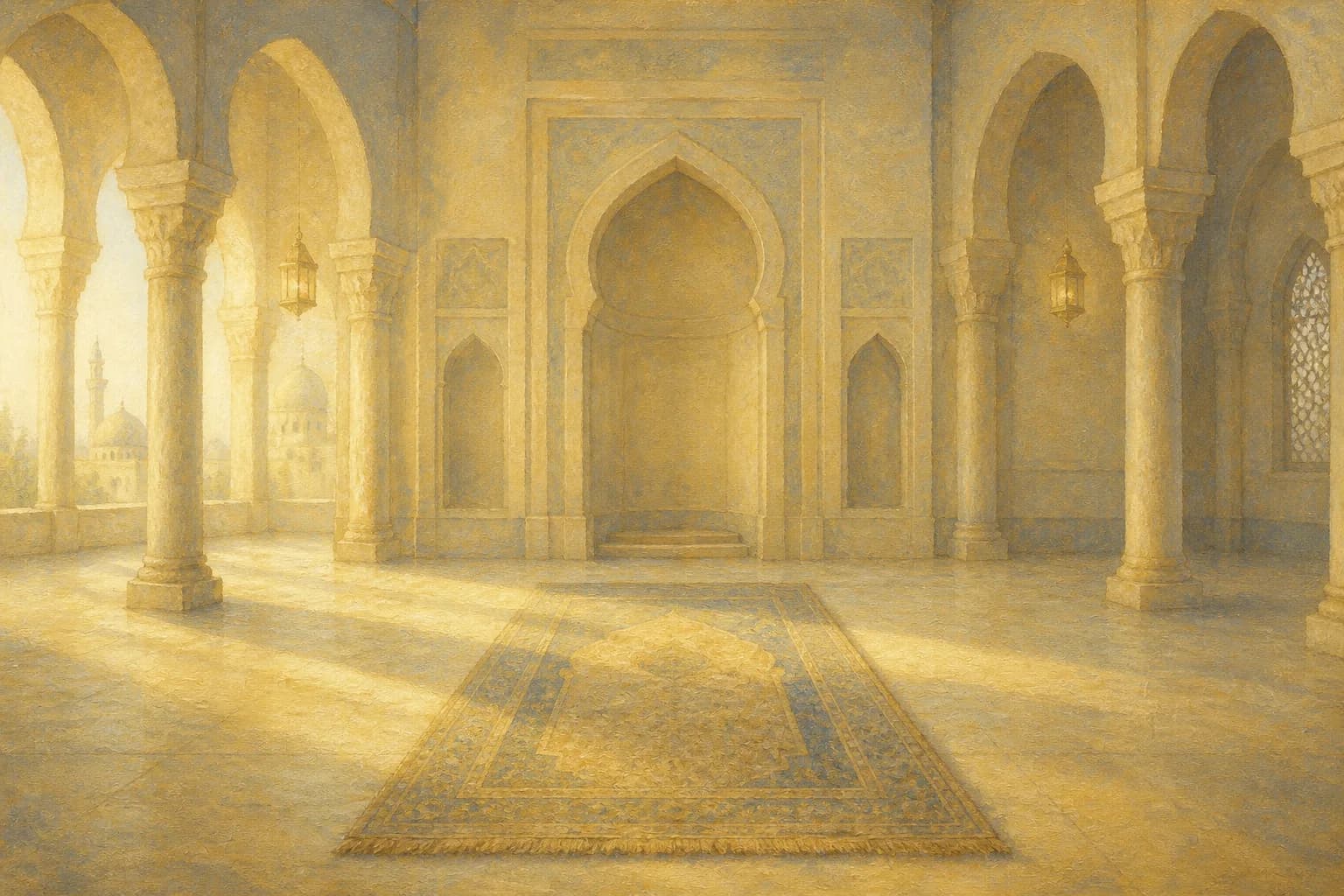

Maghrib prayer arrives at a powerful threshold. The day has finished — you have worked, studied, or cared for others — and the sun has just slipped below the horizon. The call to prayer at this moment is an invitation to pause before the day fully closes and bring it back to its rightful center.
For new Muslims, those re-establishing their prayers, or anyone who wants to feel more confident in the details of Maghrib, this guide covers everything: the number of rakahs, each step in sequence, the key Arabic recitations, and how to build the habit that makes this prayer a genuine anchor of the day.
How Do You Pray Maghrib Prayer?
Maghrib prayer consists of 3 fard (obligatory) rakahs followed by 2 sunnah mu'akkadah rakahs. You begin by making wudu and facing the qibla, then enter the prayer with Takbiratul Ihram ("Allahu Akbar"), recite Surah Al-Fatiha and a second surah in the first two rakahs, and Al-Fatiha alone in the third. The total prayer takes approximately 7-10 minutes for the fard alone and 12-15 minutes including the sunnah.
Why Maghrib Prayer Matters in Islam
Maghrib is one of the five daily prayers (صَلَاة, salah) that are among the foundational pillars of Islam. The Quran specifically references the times of prayer, including the moment of sunset:
أَقِمِ الصَّلَاةَ لِدُلُوكِ الشَّمْسِ إِلَى غَسَقِ اللَّيْلِ وَقُرْآنَ الْفَجْرِ
"Establish prayer at the decline of the sun until the darkness of the night, and [also] the Quran of dawn." — (Surah Al-Isra, 17:78)
The Prophet ﷺ said: "The dearest of deeds to Allah are the deeds done regularly, even if they are few." (Sahih al-Bukhari 6465). Maghrib, prayed at the same threshold each day, is one of the clearest opportunities to build that regularity.
The Maghrib prayer window is relatively short — generally 60 to 90 minutes depending on location and season — which gives it a natural urgency. Praying it promptly at the sound of the adhan is itself a practice of responding to Allah's call without delay.
Maghrib Prayer at a Glance: Rakat Breakdown
| Type | Rakahs | Notes |
|---|---|---|
| Fard (obligatory) | 3 | Must be prayed; constitutes the core of Maghrib |
| Sunnah mu'akkadah (emphasized) | 2 | After fard; strongly recommended, consistent practice of the Prophet ﷺ |
| Nafl (voluntary) | 2 | Optional; prayed after the sunnah if desired |
| Total (incl. all) | 7 | Most Muslims pray the 3 fard + 2 sunnah = 5 |
Step-by-Step Guide to Praying Maghrib
Before You Begin
- Make wudu — ensure you are in a state of ritual purity. If you are unsure, perform wudu before proceeding.
- Find a clean place — any clean surface; a prayer mat is recommended.
- Face the qibla — the direction of the Kaaba in Mecca. Use a qibla app or compass if needed.
- Wear appropriate clothing — men should cover at least navel to knee; women should be fully covered except face and hands.
Making Niyyah (Intention)
Intention (niyyah) is made in the heart, not aloud. Formulate your intention before beginning: "I intend to pray the 3 fard rakahs of Maghrib for the sake of Allah."
Rakah 1
1. Takbiratul Ihram — Begin by raising both hands to ear level and saying:
اللَّهُ أَكْبَرُ
Allahu Akbar — "Allah is the Greatest."
This opens the prayer. From this moment, you are in the prayer; all worldly matters are set aside.
2. Opening Supplication (Thana) — Silently recite:
سُبْحَانَكَ اللَّهُمَّ وَبِحَمْدِكَ، وَتَبَارَكَ اسْمُكَ، وَتَعَالَى جَدُّكَ، وَلَا إِلَهَ غَيْرُكَ
Subhanakallahumma wabihamdika, wa tabarakasmuka, wa ta'ala jadduka, wa la ilaha ghayruk
"Glory be to You, O Allah, and praise. Blessed is Your name, exalted is Your majesty, and there is no god but You."
3. Seek refuge and say Bismillah — Silently say A'udhu billahi minash-shaytanir-rajim and then Bismillahir-rahmanir-rahim.
4. Recite Surah Al-Fatiha — Recite it fully, with proper tajweed:
الْحَمْدُ لِلَّهِ رَبِّ الْعَالَمِينَ...
Alhamdulillahi Rabbil 'alamin... (complete the surah through ad-dalin)
At the end, say Amin quietly (or aloud in congregation behind the imam).
5. Recite a second surah — Any surah is permissible. Shorter surahs such as Al-Ikhlas (112), Al-Kawthar (108), or An-Nasr (110) are commonly used.
6. Ruku (bowing) — Say Allahu Akbar while bending to bow, hands on knees, back flat, and recite at least three times:
سُبْحَانَ رَبِّيَ الْعَظِيمِ
Subhana Rabbiyal Adhim — "Glory be to my Lord, the Most Great."
7. Rise from ruku — Stand upright, saying:
سَمِعَ اللَّهُ لِمَنْ حَمِدَهُ
Sami'Allahu liman hamidah — "Allah hears the one who praises Him."
Then say:
رَبَّنَا وَلَكَ الْحَمْدُ
Rabbana wa lakal hamd — "Our Lord, to You is all praise."
8. First Sajdah (prostration) — Say Allahu Akbar while going down. Place forehead, nose, palms, knees, and toes on the ground. Recite at least three times:
سُبْحَانَ رَبِّيَ الْأَعْلَى
Subhana Rabbiyal A'la — "Glory be to my Lord, the Most High."
9. Sit briefly — Rise from sujood saying Allahu Akbar, sit momentarily.
10. Second Sajdah — Repeat step 8.
11. Rise to Rakah 2 — Stand for the second rakah saying Allahu Akbar.
Rakah 2
Repeat steps 4-10 (Surah Al-Fatiha, second surah, ruku, both sajdahs).
After the second sajdah of Rakah 2, instead of standing, sit for the first Qa'dah (sitting).
First Qa'dah — Recite Tashahhud:
التَّحِيَّاتُ لِلَّهِ وَالصَّلَوَاتُ وَالطَّيِّبَاتُ، السَّلَامُ عَلَيْكَ أَيُّهَا النَّبِيُّ وَرَحْمَةُ اللَّهِ وَبَرَكَاتُهُ، السَّلَامُ عَلَيْنَا وَعَلَى عِبَادِ اللَّهِ الصَّالِحِينَ، أَشْهَدُ أَلَّا إِلَهَ إِلَّا اللَّهُ وَأَشْهَدُ أَنَّ مُحَمَّدًاً عَبْدُهُ وَرَسُولُهُ
At-tahiyyatu lillahi was-salawatu wat-tayyibatu, as-salamu alaika ayyuhan-nabiyyu wa rahmatullahi wa barakatuh, as-salamu alayna wa ala ibadillahis-salihin, ashhadu alla ilaha illallah wa ashhadu anna Muhammadan abduhu wa rasuluh
After saying the Tashahhud, stand for Rakah 3 by saying Allahu Akbar.
Rakah 3
Recite only Surah Al-Fatiha — no second surah in the third rakah.
Complete ruku and both sajdahs as in the previous rakahs.
After the second sajdah of Rakah 3, sit for the Final Qa'dah.
Final Qa'dah — Recite Tashahhud (full text as above), then add Salawat on the Prophet ﷺ:
اللَّهُمَّ صَلِّ عَلَى مُحَمَّدٍ وَعَلَى آلِ مُحَمَّدٍ كَمَا صَلَّيْتَ عَلَى إِبْرَاهِيمَ وَعَلَى آلِ إِبْرَاهِيمَ، إِنَّكَ حَمِيدٌ مَجِيدٌ
Allahumma salli ala Muhammadin wa ala ali Muhammadin kama sallayta ala Ibrahima wa ala ali Ibrahim, innaka Hamidun Majid
You may then make any brief dua before the tasleem.
Tasleem — End the prayer by turning to the right and saying:
السَّلَامُ عَلَيْكُمْ وَرَحْمَةُ اللَّهِ
Assalamu alaikum wa rahmatullah
Then turn to the left and repeat.
This completes the 3 fard rakahs of Maghrib.
The 2 Sunnah Rakahs After Maghrib
After completing the fard, perform 2 sunnah mu'akkadah rakahs. These are prayed exactly as a standard two-rakah prayer: Al-Fatiha and a second surah in each rakah, with only one sitting (the final Qa'dah with Tashahhud and tasleem after the second rakah.
The Prophet ﷺ said of these rakahs: "Whoever prays twelve voluntary rak'ahs in a day, Allah will build a house for him in Paradise." (Sahih Muslim 728). The Maghrib sunnah is included in this count.
Building the Maghrib Habit
The key to praying Maghrib consistently is treating the adhan as a hard stop — not a soft reminder. When you hear the adhan for Maghrib or see that sunset has occurred, the activity in your hands ends and the prayer begins.
Practical steps:
- Set a prayer time alert so Maghrib time does not pass unnoticed, especially in winter when it arrives early
- Pray in congregation whenever possible — the reward for praying in congregation is 27 times greater than praying alone (Sahih al-Bukhari 645)
- Pair Maghrib with a brief dhikr routine after — the post-prayer adhkar take two to three minutes and anchor the prayer in a wider act of remembrance
For more on deepening the quality of each prayer, how to improve concentration in salah provides practical techniques for reducing distraction and building khushoo. And for building the broader habit of five daily prayers, how to pray fajr uses the same step-by-step format for the morning prayer.
Still struggling to perform salah properly?
Learn each prayer step by step, understand what you are saying, and build a consistent salah habit with clear, scholar-approved lessons in DeenUp.
Take the Salah Quiz
Common Mistakes in Maghrib Prayer
Rushing through recitations — Ruku and sujood require enough time for the body to be still, not just a quick nod. The Prophet ﷺ said the prayer of the one who does not settle his back in ruku and sujood is not complete (Sahih al-Bukhari 793).
Forgetting the niyyah — The intention is made in the heart before Takbiratul Ihram. It does not need to be said aloud. If you begin without a conscious intention, the prayer is invalid — pause, make intention, and begin again.
Adding a second surah in the third rakah — Only Surah Al-Fatiha is recited in the third fard rakah. Adding a surah is not a nullifying error, but it is not the established sunnah.
Skipping the sunnah rakahs — While they are not obligatory, missing the Maghrib sunnah rakahs regularly means missing the completion of what the Prophet ﷺ modeled. When time is genuinely tight, the fard is what counts — but try not to let the sunnah become optional in practice.
Breaking concentration with phone or conversation — Entering a conversation or glancing at a phone during prayer breaks khushoo and may even nullify the prayer if it involves prolonged, deliberate speech. See the importance of jamaah prayer for how praying in congregation helps naturally maintain focus.
After Maghrib: Recommended Adhkar
After completing both the fard and sunnah rakahs, sit for a brief dhikr:
- Say Subhanallah 33 times
- Say Alhamdulillah 33 times
- Say Allahu Akbar 33 times
- Complete with La ilaha illallahu wahdahu la sharika lah, lahul mulku wa lahul hamdu wa huwa ala kulli shay'in qadir once
Duas to read after salah provides the full post-prayer dua collection with transliterations and Arabic text, and dua after adhan covers what to say when you hear the adhan before you begin.
DeenBack's guide on building an evening salah routine explores how Maghrib fits into a broader evening spiritual practice, connecting the prayer to what comes before and after in the day. For a reflection on the spiritual beauty of the evening as a sacred time in Islamic tradition, Demi Manifest on the sacred nature of the evening offers a valuable perspective for anyone wanting to deepen their relationship with Maghrib.
For the full Quranic reference to the prayer times including Maghrib, see Surah Al-Isra 17:78 at Quran.com and the hadith collections on prayer times at Sunnah.com — Sahih al-Bukhari, Book of Prayer Times.
Common Questions
Can I pray Maghrib sitting down? Yes, if you are unable to stand due to illness or disability, you may pray Maghrib sitting — and then lying down if sitting is also not possible. The Prophet ﷺ said: "Pray standing; if you cannot, then sitting; if you cannot, then on your side." (Sahih al-Bukhari 1117). The prayer remains valid and full in reward.
What if I make a mistake during Maghrib? If you forget a rakah or make a prostration error, you perform the Sujood al-Sahw (prostration of forgetfulness) before the final tasleem. This consists of two additional prostrations after the Tashahhud, before concluding the prayer with tasleem. Scholars have detailed guidance on which errors require it.
Can I combine Maghrib with Isha? Combining Maghrib and Isha (Jam'u ta'khir or Jam'u taqdim) is permitted in Islam under specific circumstances: rain, illness, travel, or genuine hardship. It is not permissible as a general convenience in normal conditions. When combining, both prayers are prayed in full with their normal rak'ahs — they are not shortened, just combined in time.
How long does Maghrib prayer take? The 3 fard rakahs of Maghrib, prayed at a calm, attentive pace, take approximately 7-10 minutes. Including the 2 sunnah rakahs and a brief post-prayer dhikr, the full Maghrib routine is 15-20 minutes. Rushing is not recommended; the Prophet ﷺ warned against hurrying through prayer without proper settling.
Closing: Making Maghrib the Anchor of Your Evening
Maghrib arrives at exactly the right moment — when the day's work is done and the evening has not yet fully claimed its hours. It is a natural pause that needs only a decision to be honored.
Learn the steps once, practice them consistently, and the prayer becomes second nature. What begins as effort becomes the rhythm that holds the day together. Five minutes of preparation tonight — reviewing the steps, setting your reminder, preparing your prayer space — is the difference between Maghrib as intention and Maghrib as practice.
How to pray sunnah prayers covers the full picture of voluntary prayers that surround the five daily prayers, including the Maghrib sunnah in context. And once Maghrib is established, how to pray asr follows a similar step-by-step format for the afternoon prayer.
Still struggling to perform salah properly?
Learn each prayer step by step, understand what you are saying, and build a consistent salah habit with clear, scholar-approved lessons in DeenUp.
Take the Salah QuizFrequently Asked Questions
How many rakahs is Maghrib prayer?
Maghrib prayer consists of 3 fard (obligatory) rakahs, followed by 2 sunnah mu-akkadah (emphasized sunnah) rakahs. Some scholars also mention 2 optional nafl rakahs after the sunnah. The 3 fard rakahs are the core of Maghrib and are obligatory for every adult Muslim. The sunnah rakahs are strongly recommended and were the consistent practice of the Prophet Muhammad.
What time is Maghrib prayer?
Maghrib prayer begins at sunset — the moment the sun completely disappears below the horizon — and its time extends until the red twilight (shafaq) disappears from the sky, which is roughly 60 to 90 minutes after sunset depending on the season and location. Most scholars regard Maghrib as one of the shorter-windowed prayers, and praying it early in its window — at or shortly after sunset — is recommended.
Can I pray Maghrib after the time has passed?
If you missed Maghrib prayer without a valid excuse, you must make it up (qada) as soon as possible — performing it exactly as you would the original, with 3 fard rakahs, even though the time has passed. If you had a valid excuse such as sleep or forgetting, there is no sin, and the makeup prayer expunges the obligation. Scholars emphasize that habitual delay until the time expires requires sincere tawbah (repentance).
What surah should I recite in Maghrib prayer?
In the first two rakahs of Maghrib, you recite Surah Al-Fatiha followed by another surah from the Quran — any surah is permissible, though the Prophet frequently recited shorter to medium surahs at Maghrib. In the third rakah, you recite only Surah Al-Fatiha — no additional surah is recited in the third fard rakah. The sunnah rakahs after Maghrib follow the same structure as two-rakah prayers.
Do I need to recite a second surah in the third rakah of Maghrib?
No. In the third fard rakah of Maghrib, you recite only Surah Al-Fatiha — no additional surah. This applies to all prayers with 3 or 4 fard rakahs: only the first two rakahs include a surah after Al-Fatiha. The third and fourth rakahs are completed with Al-Fatiha alone. This is established by the practice of the Prophet Muhammad and is the consensus position of all four major schools of Islamic law.
What are the sunnah rakahs of Maghrib prayer?
After the 3 fard rakahs of Maghrib, there are 2 sunnah mu-akkadah rakahs. These are emphasized sunnahs — the Prophet prayed them regularly, and scholars strongly recommend them. They are prayed as a standard two-rakah prayer: Al-Fatiha plus a surah in each rakah, sitting for Tashahhud after the second rakah, then tasleem. There are also 2 optional nafl rakahs that can be added after the sunnah.
How do I know which direction to face for Maghrib prayer?
You must face the qibla — the direction of the Kaaba in Mecca, Saudi Arabia — for all five daily prayers including Maghrib. If you are unsure of the direction, use a qibla compass, the qibla feature in a prayer app, or ask someone who knows. For travelers or those in very remote areas, scholars allow facing the approximate direction when the exact direction cannot be determined, as long as sincere effort is made.