

- Authors

- Name
- Ahmad
- Role
- Senior Marketing Manager, Islamic education • DeenUp
بِسْمِ اللهِ الرَّحْمٰنِ الرَّحِيْمِ
In the name of God, the Most Gracious, the Most Merciful.
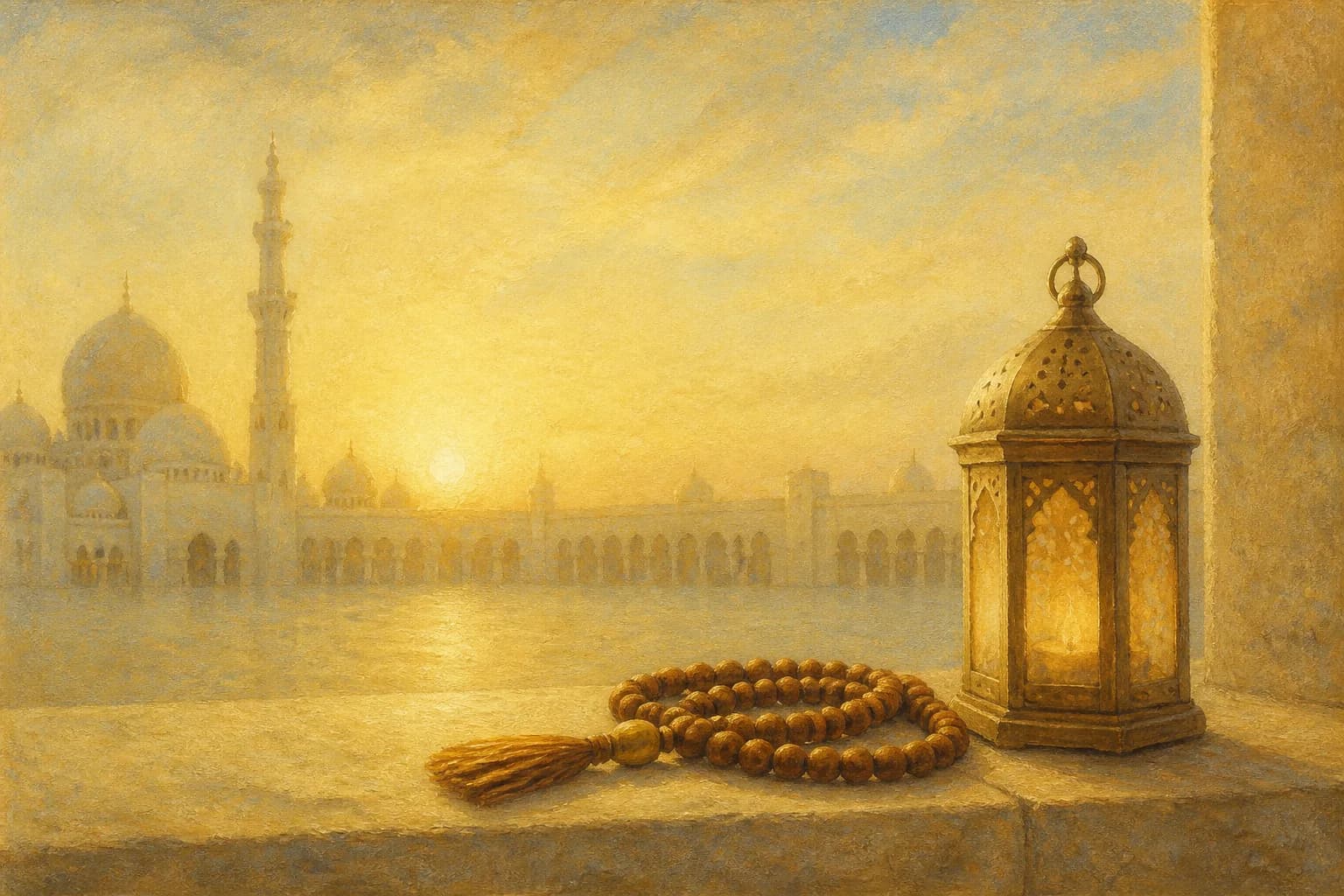

Every morning begins with a choice: let the day arrive on its own terms, or meet it with intention. In Islamic practice, that intention takes a concrete form — azkar, specific phrases of remembrance that anchor the soul before the world starts pulling in every direction.
Morning azkar (أذكار الصباح) are not just a ritual. They are protection, gratitude, and connection compressed into fifteen minutes. The Prophet ﷺ performed them consistently, and his companions carried them forward across centuries. Today they remain one of the most accessible and spiritually significant practices available to every Muslim, requiring no special equipment and no scholar present — only presence of heart and a few minutes after Fajr.
What Are Morning Azkar in Islam?
Morning azkar (أذكار الصباح) are specific authenticated phrases of remembrance — drawn from the Quran and authentic hadith — recited after the Fajr prayer, before sunrise. They include Ayatul Kursi, Surah Al-Ikhlas, Surah Al-Falaq, and Surah An-Nas (each three times), the Sayyid al-Istighfar, and several shorter supplications seeking protection, provision, and gratitude. The Prophet ﷺ described the reward of these specific azkar in direct, concrete terms — protection from harm, forgiveness of sins, and assurance of paradise for those who recite them with genuine conviction.
What Does the Quran and Sunnah Teach About Morning Azkar?
The Quran establishes the foundation of morning remembrance in Surah Al-Ahzab:
يَا أَيُّهَا الَّذِينَ آمَنُوا اذْكُرُوا اللَّهَ ذِكْرًا كَثِيرًا
"O you who believe, remember Allah much." — (Surah Al-Ahzab, 33:41)
The following verse specifies the timing:
وَسَبِّحُوهُ بُكْرَةً وَأَصِيلًا
"And exalt Him morning and evening." — (Surah Al-Ahzab, 33:42)
The Prophet ﷺ gave specific guidance on the most important morning azkar. Among them is the Sayyid al-Istighfar — the master supplication for forgiveness:
اللَّهُمَّ أَنْتَ رَبِّي لَا إِلَٰهَ إِلَّا أَنْتَ خَلَقْتَنِي وَأَنَا عَبْدُكَ
"O Allah, You are my Lord. There is no god but You. You created me and I am Your servant..."
The Prophet ﷺ said: "Whoever says it with firm belief in the morning and dies that day before evening will be among the people of Paradise." — (Sahih al-Bukhari 6306)
Another core morning azkar is the declaration of contentment with Allah:
رَضِيتُ بِاللَّهِ رَبًّا، وَبِالْإِسْلَامِ دِينًا، وَبِمُحَمَّدٍ نَبِيًّا
"I am pleased with Allah as my Lord, with Islam as my religion, and with Muhammad ﷺ as my Prophet." — (Abu Dawud 5072)
The Prophet ﷺ said that whoever says this three times in the morning has a right upon Allah to be pleased on the Day of Judgement — a profound promise for a supplication that takes less than fifteen seconds.
Core Morning Azkar — Reference Table
The morning azkar collection from authentic sources includes many phrases. Here are the most commonly recommended core azkar with their repetition counts and hadith sources:
| Azkar | Opening Arabic | Times | Source |
|---|---|---|---|
| Sayyid al-Istighfar | اللَّهُمَّ أَنْتَ رَبِّي | 1 | Sahih al-Bukhari 6306 |
| Ayatul Kursi | اللَّهُ لَا إِلَٰهَ إِلَّا هُوَ | 1 | Sahih al-Bukhari |
| Surah Al-Ikhlas | قُلْ هُوَ اللَّهُ أَحَدٌ | 3 | Abu Dawud 5082 |
| Surah Al-Falaq | قُلْ أَعُوذُ بِرَبِّ الْفَلَقِ | 3 | Abu Dawud 5082 |
| Surah An-Nas | قُلْ أَعُوذُ بِرَبِّ النَّاسِ | 3 | Abu Dawud 5082 |
| Rida bil-Islam | رَضِيتُ بِاللَّهِ رَبًّا | 3 | Abu Dawud 5072 |
| SubhanAllah wa bihamdihi | سُبْحَانَ اللَّهِ وَبِحَمْدِهِ | 100 | Sahih Muslim 2691 |
For the complete texts with full Arabic, transliteration, and translation, the Sunnah.com morning adhkar collection is an authoritative reference drawn entirely from authenticated hadith.
Why Morning Azkar Matter for Modern Muslims
We live in an attention economy designed to capture the first moments of your day — notifications, news alerts, social feeds that pull at you before you have fully woken up. The morning azkar offer a different opening: fifteen minutes given to Allah before the world stakes its claim.
This is not about rejecting modern life. It is about entering it from a rooted place. When you begin with gratitude, protection, and acknowledgment of Allah's sovereignty, the rest of the morning carries a different quality. Small frustrations land differently. Decisions feel clearer. The connection you establish at Fajr does not simply evaporate when the day begins — it lingers.
The Prophet ﷺ made this connection explicit. He taught that morning dhikr is a shield: it protects from harm, maintains barakah (بَرَكَة, divine blessing) in provision, and keeps the heart oriented toward what matters most. For Muslims navigating busy schedules, commutes, and competing demands, the morning azkar are not a luxury — they are the spiritual infrastructure that makes sustained faith possible.
The morning adhkar in Islam guide covers this broader practice in depth. DeenBack also offers a practical take in their Fajr morning routine guide, which focuses specifically on structuring the post-Fajr hour.
How to Build a Morning Azkar Practice That Lasts
Starting is simple; sustaining takes a small amount of structure. Here is a practical approach:
Start with three items. In the first two weeks, commit only to Ayatul Kursi, the three Quls (once each), and Sayyid al-Istighfar. This takes under five minutes and establishes the core habit without overwhelming you on the difficult mornings.
Attach it directly to Fajr. The most effective cue is treating the morning azkar as part of the Fajr prayer itself rather than a separate practice. When you finish your Tashahhud and give Salam, move directly into the azkar without leaving your prayer spot.
Use a checklist. Reading from an app or printed card is perfectly permissible during the learning phase. The goal is building familiarity with the texts — memorization follows naturally from repetition. You will find that within a few weeks, the core phrases come without looking.
Pair it with dhikr throughout the day. The importance of dhikr in Islam explains why the morning azkar are only the beginning. Carrying phrases like SubhanAllah and Alhamdulillah through the rest of the day extends the spiritual protection of the morning azkar into every hour.
Do you feel your duas are unanswered?
Have you read the dua properly? Learn authentic duas, understand their meanings, and call upon Allah with greater confidence through DeenUp.
Take the Dua Quiz
Deepening the Practice Over Time
Once the core azkar are established — typically after four to six weeks of consistent practice — you can expand toward the fuller collection, which takes 12–15 minutes. Key additions include:
- 100 repetitions of SubhanAllah wa bihamdihi (سُبْحَانَ اللَّهِ وَبِحَمْدِهِ): the Prophet ﷺ said sins are forgiven even as plentiful as sea foam (Sahih Muslim 2691)
- Morning declaration (أَصْبَحْنَا وَأَصْبَحَ الْمُلْكُ لِلَّهِ): a brief acknowledgment that another day belongs to Allah
- Seeking refuge from Hellfire: specific to morning and evening, recited seven times, with strong hadith support
The evening adhkar in Islam guide covers the companion practice to morning azkar. Together, morning and evening azkar form a protective bookend around the entire day. For what to recite immediately after each prayer — before moving into the fuller morning azkar — the duas to read after salah guide is a direct companion resource.
For a broader perspective on how consistent post-prayer practices transform your relationship with worship over time, the Demi Manifest piece on post-prayer rituals captures what changes when these short practices become second nature.
Signs the Morning Azkar Practice Is Taking Root
Progress in morning azkar is subtle but real. Watch for these markers:
The morning feels less reactive. Not because circumstances changed, but because your inner starting point shifted from anxious to anchored.
Phrases of dhikr surface throughout the day. You find yourself returning to SubhanAllah or Alhamdulillah spontaneously at moments of beauty, difficulty, or gratitude.
The absence of the azkar feels wrong. On the morning you miss them, something feels incomplete. That discomfort is the practice telling you it has become part of you.
These shifts describe the transition from practicing a Sunnah to living it. The dua for waking up guide is a natural starting point if you want to extend this orientation even earlier — from the moment you open your eyes.
Common Questions About Morning Azkar
Can non-Arabic speakers recite morning azkar? Yes. Reading from transliteration while memorizing is entirely valid. Using a written text or app is better than skipping the practice. Scholars encourage learning the Arabic, but they consistently affirm that the intention and sincerity count, not the memorization level.
Do I need wudu for morning azkar? The majority scholarly position is that wudu is not required for dhikr — it is required for the Quran recitation component (such as Ayatul Kursi) in the strictest view. The more accessible ruling, followed by many scholars, is that the azkar may be recited without wudu, though maintaining wudu from Fajr is spiritually recommended.
What is the best source for the complete morning azkar texts? The book Hisn al-Muslim (Fortress of the Muslim), compiled by Sheikh Said al-Qahtani from authenticated hadith, is the most widely used reference. The Sunnah.com collection provides specific hadith with grading for individual azkar.
The fajr prayer benefits guide also explains why the hour of Fajr specifically carries extraordinary spiritual weight — understanding that context makes the morning azkar feel less like a checklist and more like a gift.
Do you feel your duas are unanswered?
Have you read the dua properly? Learn authentic duas, understand their meanings, and call upon Allah with greater confidence through DeenUp.
Take the Dua QuizFrequently Asked Questions
What are morning azkar in Islam?
Morning azkar (أذكار الصباح) are specific authenticated phrases of remembrance recited after the Fajr prayer. They include Ayatul Kursi, the three Quls recited three times each, Sayyid al-Istighfar, and several shorter supplications. Together they form a protected daily practice from the Sunnah, taking roughly 10 to 15 minutes to complete with presence of heart.
When is the correct time to recite morning azkar?
The correct time for morning azkar is after the Fajr prayer, ideally before sunrise. This window carries particular spiritual weight in Islamic teaching. If the time passes, scholars generally permit reciting the azkar later in the morning as a make-up, though the primary window has closed.
How long does it take to recite morning azkar?
A complete set of morning azkar takes approximately 10 to 15 minutes when recited with presence of heart. Beginners can start with just 5 minutes using the three core items — Ayatul Kursi, the three Quls, and Sayyid al-Istighfar — then gradually expand the practice over several weeks as the texts become familiar.
What is the difference between morning azkar and morning dua?
Morning azkar are fixed, authenticated phrases from the Quran and Sunnah recited in a structured sequence. Morning dua is personal supplication in any language. Both matter: azkar form the structured daily foundation, while personal dua is the open-hearted conversation with Allah that no fixed text can replace.
Can I read morning azkar from my phone?
Reading morning azkar from a phone or app is entirely permissible. What matters is sincerity and presence of heart, not the medium. Using a digital tool with the full Arabic text and transliterations is far better than skipping the azkar — and helps considerably during the memorization phase.
What is the most important morning azkar to learn first?
The Sayyid al-Istighfar is often recommended first. The Prophet said whoever recites it with conviction in the morning and dies that day enters Paradise (Sahih al-Bukhari 6306). Ayatul Kursi is the second priority — once memorized it takes under 30 seconds to recite and carries immense reward from the authentic Sunnah.
What if I miss morning azkar on a given day?
Morning azkar are Sunnah, not Fard — missing them on a day carries no sin. If you forget, recite them whenever you remember. The more important response is simply returning to the habit the next morning. Long-term consistency matters more than perfect compliance on any single day.