

- Authors

- Name
- Ahmad
- Role
- Senior Marketing Manager, Islamic education • DeenUp
بِسْمِ اللهِ الرَّحْمٰنِ الرَّحِيْمِ
In the name of God, the Most Gracious, the Most Merciful.
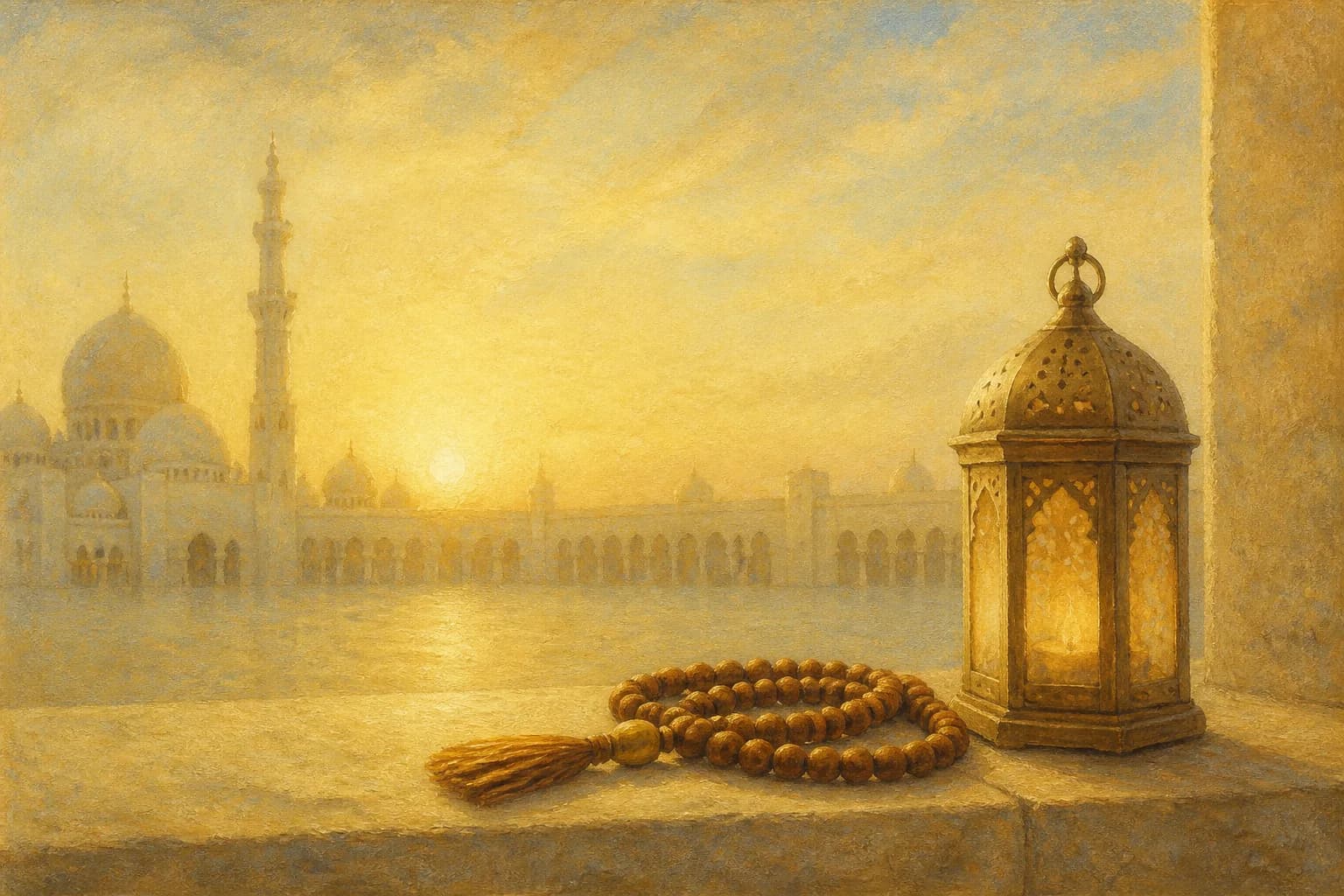
Why Zikr After Namaz Changes Everything
You finish your salah, say the tasleem, and then... what? For many Muslims, prayer ends the moment they say "Assalamu Alaykum wa Rahmatullah" and stand up. But the Prophet ﷺ taught that the moments immediately after salah are among the most spiritually charged of the day — and he gave us specific, powerful words to fill them.
Zikr after namaz is not a ritual add-on. It is a continuation of worship that the Prophet ﷺ practiced and prescribed with precision, promising rewards that are almost impossible to comprehend. If you have never established this habit, today is the right day to start.

What Is Zikr After Namaz?
Zikr after namaz (dhikr ba'd al-salah) refers to the structured forms of remembrance the Prophet Muhammad ﷺ prescribed to follow each of the five obligatory prayers. The core practice is reciting SubhanAllah 33 times, Alhamdulillah 33 times, and Allahu Akbar 33 times — 99 counts total — then completing 100 with a declaration of tawhid. Authenticated in Sahih Muslim 597, the Prophet ﷺ said this set erases sins even if they are as vast as the foam of the sea.
The Complete Post-Salah Dhikr Set
SubhanAllah — Glory Be to Allah
سُبْحَانَ اللَّهِ
SubḥānAllāh
"Glory be to Allah." — Recite 33 times.
This phrase declares Allah's perfection and freedom from all imperfection. It is the first of the three great glorifications, recommended to be said slowly and deliberately with presence of heart.
Alhamdulillah — All Praise Is Due to Allah
الْحَمْدُ لِلَّهِ
Alḥamdulillāh
"All praise is due to Allah." — Recite 33 times.
Hamd (praise) differs from shukr (gratitude) in that it praises Allah for His attributes, not only His gifts. This is why Allah begins the Quran with it: "All praise is due to Allah, Lord of all the worlds" (Surah Al-Fatihah, 1:2).
Allahu Akbar — Allah Is the Greatest
اللَّهُ أَكْبَرُ
Allāhu Akbar
"Allah is the Greatest." — Recite 33 times.
This is the same phrase that opens the adhan and begins every prayer. Ending the 33-33-33 set with it reminds us that no matter what awaits us after we leave the prayer mat, Allah is greater than all of it.
The Completion Phrase — Making It 100
لَا إِلَهَ إِلَّا اللَّهُ وَحْدَهُ لَا شَرِيكَ لَهُ، لَهُ الْمُلْكُ وَلَهُ الْحَمْدُ وَهُوَ عَلَى كُلِّ شَيْءٍ قَدِيرٌ
Lā ilāha illAllāhu waḥdahu lā sharīka lahu, lahul-mulku wa lahul-ḥamdu wa huwa 'alā kulli shay'in qadīr
"There is no god but Allah alone, with no partner. His is the dominion and His is all praise, and He has power over all things." — Recite once.
— (Sahih Muslim 597)
The Prophet ﷺ said: "Whoever says this after every prayer will be forgiven his sins even if they are as the foam of the sea." (Sahih Muslim 597)
The Context: Why These Words?
These phrases are not arbitrary. They map directly onto three dimensions of Islamic theology. SubhanAllah declares what Allah is not — free from all imperfection (tanzih). Alhamdulillah affirms what Allah is — worthy of all praise. Allahu Akbar places everything else in perspective — nothing rivals Him in greatness.
The Prophet ﷺ also said: "There are two phrases that are light on the tongue, heavy in the scale, and beloved to the Most Merciful: SubhanAllahi wa bihamdih, SubhanAllahil-Azim" (Sahih al-Bukhari 6406). If Allah loves these words in any context, how much more so when said in the moments immediately after His fard prayer?
Allah says in the Quran: "And establish prayer and give zakat and bow with those who bow" (Surah Al-Baqarah, 2:43). The scholars of tafsir note that establishing prayer includes honoring its completion — not rushing away the moment the last tasleem is said.
The Dhikr Reference Table
| Dhikr | Arabic | Count | Source |
|---|---|---|---|
| SubhanAllah | سُبْحَانَ اللَّهِ | 33× after each salah | Sahih Muslim 597 |
| Alhamdulillah | الْحَمْدُ لِلَّهِ | 33× after each salah | Sahih Muslim 597 |
| Allahu Akbar | اللَّهُ أَكْبَرُ | 33× after each salah | Sahih Muslim 597 |
| Completion phrase (tawhid) | لَا إِلَهَ إِلَّا اللَّهُ وَحْدَهُ... | 1× to complete 100 | Sahih Muslim 597 |
| Ayatul Kursi | آيَةُ الْكُرْسِيِّ (2:255) | 1× after each obligatory salah | Sunan al-Kubra (al-Nasai) |
| Three Quls (Fajr and Maghrib) | الإخلاص، الفلق، الناس | 3× each after Fajr and Maghrib | Abu Dawud 5082 |
Making Zikr After Namaz Part of Your Daily Life
The single biggest barrier to consistent post-prayer dhikr is not laziness — it is distraction. You finish salah, your phone buzzes, someone calls your name, and the moment is gone. Here is how to protect it.
Stay seated after the tasleem. The Prophet ﷺ would remain in his prayer position after tasleem for the dhikr. Make this a physical rule: do not stand until you have completed the 33-33-33 set. This one habit eliminates 90% of missed post-salah dhikr.
Use your fingers to count. The Prophet ﷺ counted tasbih on his fingers (Abu Dawud 1502), and his Companions followed this practice. Your right hand has enough sections on the fingers to count to 33 without any tool. A physical counter also works — but your hand is always with you.
Recite Ayatul Kursi before standing. After the 100-count set, sit for 30 more seconds and recite Ayatul Kursi (Surah Al-Baqarah, 2:255). The Prophet ﷺ said: "Whoever recites Ayatul Kursi after every obligatory prayer, nothing prevents him from entering Paradise except death" (Sunan al-Kubra al-Nasai, corroborated by Ibn Hibban). This one verse is the most powerful protection in the Quran.
After Fajr and Maghrib, add the three Quls. Surah Al-Ikhlas, Surah Al-Falaq, and Surah An-Nas — recited three times each — provide what scholars describe as a complete shield for the period until the next prayer (Abu Dawud 5082). These three surahs together take under two minutes.
The full post-salah routine — 33-33-33-1, Ayatul Kursi, and the three Quls on Fajr and Maghrib — runs five to seven minutes. That is less time than a single social media scroll session. And its effects are qualitatively different: instead of leaving salah scattered, you leave it grounded, protected, and spiritually present.
Our guide on daily dhikr and how to build the remembrance habit goes deeper on structuring your day around sustained remembrance. If you want to understand the fuller tradition, the importance of dhikr in Islamic practice explains why Allah commands it so consistently in the Quran. For the morning-specific dimension, morning adhkar in Islam covers the full set of supplications recommended between Fajr and sunrise.

Keep learning your deen with short, sourced lessons in DeenUp.
A Special Dua to Add After Every Prayer
The Prophet ﷺ taught Muadh ibn Jabal a dua and instructed him never to leave it after every prayer:
اللَّهُمَّ أَعِنِّي عَلَى ذِكْرِكَ وَشُكْرِكَ وَحُسْنِ عِبَادَتِكَ
Allāhumma a'innī 'alā dhikrika wa shukrika wa ḥusni 'ibādatik
"O Allah, help me to remember You, thank You, and worship You well."
— (Abu Dawud 1522)
This is the dua you make when you want the dhikr itself to become easier and more sincere — a meta-supplication for the practice of supplication. It belongs right at the end of your post-salah routine, before you stand.
Deeper Resources on Post-Salah Dhikr
The scholarly literature on post-prayer remembrance is rich. The comprehensive guide to duas after salah on this site covers the full range of supplications recommended for different occasions and prayer times. For a deeper dive into the dhikr said specifically between Fajr and sunrise, see dhikr after salah — what to say and when.
External perspectives: the DeenBack guide to daily dhikr habits offers a structured approach to building the remembrance rhythm throughout the day. The Demi Manifest piece on post-prayer rituals explores how anchoring each part of the day to post-prayer moments reshapes the spiritual texture of ordinary life.
For the primary hadith sources, the full text of Sahih Muslim 597 is available at sunnah.com, and Ayatul Kursi (2:255) can be read with tafsir at quran.com/2/255.
Signs That Your Post-Salah Dhikr Is Taking Root
You know the practice is deepening when leaving the prayer mat without dhikr starts to feel genuinely incomplete — the same way forgetting breakfast feels off. You will also notice the quality of your transition between prayer and daily tasks changing: less mental whiplash, more quiet steadiness. The tasbih is not just words; it is a decompression chamber between worship and the world.
Closing: The Five Minutes That Shape Your Day
Each of the five daily prayers is an anchor. The post-salah dhikr is the rope that ties the anchor to the day. Without it, the salah can feel like an island — beautiful but isolated. With it, the prayer's spiritual state radiates outward into the hours that follow.
Start with just the 33-33-33 set after your next prayer. Add Ayatul Kursi when that is consistent. Build in the three Quls for Fajr and Maghrib when you are ready. Small, honest steps compound over weeks and months into a practice that reshapes how your day feels from the inside.
May Allah make our prayers and our remembrance of Him a source of light in this life and the next. Ameen.
Keep learning your deen with short, sourced lessons in DeenUp.
Frequently Asked Questions
What is zikr after namaz?
Zikr after namaz refers to the specific forms of remembrance the Prophet prescribed after each of the five daily prayers. The core practice is reciting SubhanAllah 33 times, Alhamdulillah 33 times, and Allahu Akbar 33 times, then completing 100 with a tawhid phrase (Sahih Muslim 597). This set takes 2 to 3 minutes and carries immense reward.
How many times do you recite SubhanAllah after salah?
You recite SubhanAllah — meaning 'Glory be to Allah' — exactly 33 times after each obligatory salah, followed by Alhamdulillah 33 times and Allahu Akbar 33 times. The Prophet said in Sahih Muslim 597 that this set, completed with a tawhid phrase, erases sins even if they are as vast as the foam of the sea.
Should I recite Ayatul Kursi after every salah?
Yes — reciting Ayatul Kursi (Quran 2:255) after every obligatory prayer is strongly recommended. The Prophet said whoever recites it after every prayer, nothing stands between them and Paradise except death (al-Nasai's Sunan al-Kubra, corroborated by Ibn Hibban). It takes under a minute and is among the most powerful post-salah acts of remembrance in the Sunnah.
Can I do post-salah dhikr in English?
Scholars generally recommend performing post-prayer dhikr in Arabic, since the Prophet prescribed specific Arabic phrases with precise wording. New Muslims still learning may use English translations while memorizing the Arabic. Most schools of fiqh agree the Arabic wording is preferred and spiritually complete. Consistent daily practice matters far more than waiting until your Arabic is perfect.
What are the special dhikr for Fajr and Maghrib prayers?
After Fajr and Maghrib, the Prophet recommended reciting Surah Al-Ikhlas, Surah Al-Falaq, and Surah An-Nas three times each before leaving the prayer position (Abu Dawud 5082). These three surahs — the Mu'awwidhat — provide comprehensive protection for the day or night, in addition to the standard 33-33-33 post-prayer dhikr set.
How long does post-salah dhikr take?
The core post-prayer dhikr — 33 SubhanAllah, 33 Alhamdulillah, 33 Allahu Akbar, plus the completion phrase — takes approximately 2 to 3 minutes at a mindful pace. Adding Ayatul Kursi and the three Quls brings the full practice to around 5 minutes. Consistency matters far more than speed — mindful presence over rushing through the counts.
What if I forget to do dhikr after salah?
If you forget or leave the prayer area before completing the post-salah dhikr, there is no sin — the dhikr is a highly recommended sunnah, not an obligation. Simply return to the practice at your next prayer. The Prophet encouraged these remembrances as gifts, not burdens, so resume without guilt or any need to make them up.