

- Authors

- Name
- Ahmad
- Role
- Senior Marketing Manager, Islamic education • DeenUp
بِسْمِ اللهِ الرَّحْمٰنِ الرَّحِيْمِ
In the name of God, the Most Gracious, the Most Merciful.
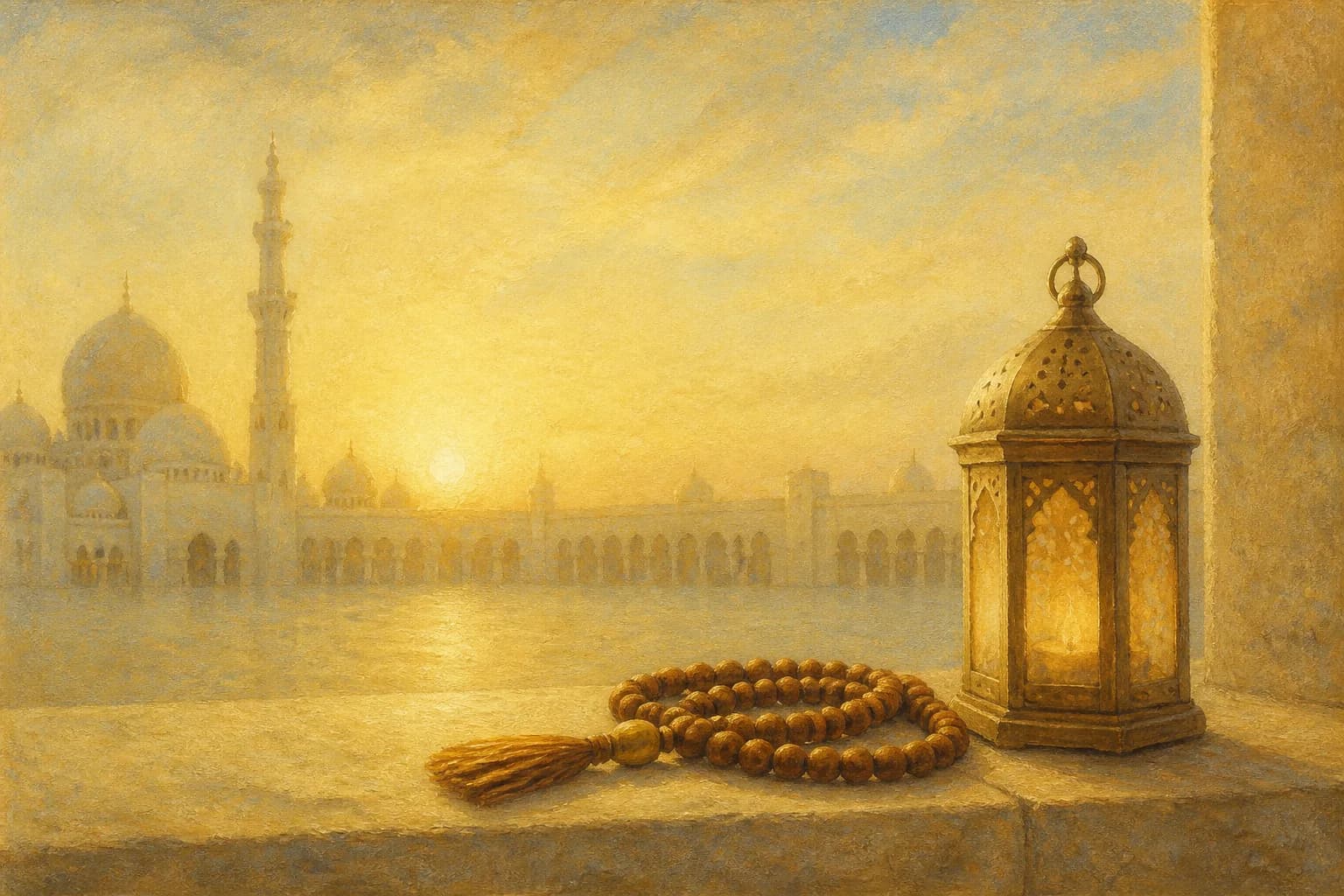

You give the final salam, and then — what? Many Muslims stand up and move on at exactly the moment the Prophet ﷺ would sit down and stay. The few minutes immediately after salat, when the heart has just turned toward Allah and the limbs have just completed an act of worship, are among the most spiritually charged of the day.
Adhkar after salat are not a vague recommendation to "remember Allah more." They are a precise, authenticated practice — specific phrases, specific counts, and specific promises — that the Prophet ﷺ observed after every prayer and taught his Companions to observe.
What Are the Adhkar After Salat?
Adhkar after salat (اذكار بعد الصلاة) are the prescribed remembrances and supplications recited immediately after completing each of the five daily prayers. The core sequence begins with seeking forgiveness three times, followed by praising Allah with a specific peace formula, then the tasbih (Subhanallah 33, Alhamdulillah 33, Allahu Akbar 34 times), and concludes with Ayat al-Kursi and the three short surahs. These are recorded in Sahih Muslim 591 and 597, and their consistent observance was the Sunnah of the Prophet ﷺ after every obligatory prayer.
The Complete Post-Prayer Adhkar
Step 1 — Seeking Forgiveness Three Times
Immediately after tasleem, begin:
أَسْتَغْفِرُ اللَّهَ — أَسْتَغْفِرُ اللَّهَ — أَسْتَغْفِرُ اللَّهَ
Astaghfirullah — Astaghfirullah — Astaghfirullah
"I seek forgiveness from Allah." (three times)
Then say:
اللَّهُمَّ أَنْتَ السَّلَامُ وَمِنْكَ السَّلَامُ، تَبَارَكْتَ يَا ذَا الْجَلَالِ وَالْإِكْرَامِ
Allahumma anta as-salam wa minka as-salam, tabarakta ya dhal jalali wal-ikram
"O Allah, You are Peace and from You comes peace. Blessed are You, O Possessor of Glory and Honor." — (Sahih Muslim 591)
Thawban narrated that when the Prophet ﷺ finished his prayer he would seek forgiveness three times, then say this formula. Scholars explain the opening istighfar covers any shortcoming in the prayer just completed — the wandering mind, the hurried recitation, the distracted heart.
Step 2 — The Tasbih Sequence
سُبْحَانَ اللَّهِ — (٣٣ مَرَّةً) — الْحَمْدُ لِلَّهِ — (٣٣ مَرَّةً) — اللَّهُ أَكْبَرُ — (٣٤ مَرَّةً)
Subhanallah (33 times) — Alhamdulillah (33 times) — Allahu Akbar (34 times)
"Glory be to Allah" — "All praise is for Allah" — "Allah is the Greatest"
Complete the hundred with:
لَا إِلَهَ إِلَّا اللَّهُ وَحْدَهُ لَا شَرِيكَ لَهُ، لَهُ الْمُلْكُ وَلَهُ الْحَمْدُ وَهُوَ عَلَى كُلِّ شَيْءٍ قَدِيرٌ
La ilaha illallah wahdahu la sharika lahu, lahul mulku wa lahul hamdu wa huwa 'ala kulli shay'in qadir
"There is no god but Allah alone, with no partner. His is the dominion, His is the praise, and He has power over all things." — (Sahih Muslim 597)
The Prophet ﷺ said whoever recites this after every prayer will have his sins forgiven, even if they were as much as the foam of the sea. This is one of the most widely cited promises in the hadith literature on post-prayer practice.
Step 3 — Ayat al-Kursi
Recite Surah Al-Baqarah, verse 255, in full:
اللَّهُ لَا إِلَهَ إِلَّا هُوَ الْحَيُّ الْقَيُّومُ لَا تَأْخُذُهُ سِنَةٌ وَلَا نَوْمٌ...
Allahu la ilaha illa huwa al-Hayyu al-Qayyum...
"Allah — there is no deity except Him, the Ever-Living, the Sustainer of existence..." — (Surah Al-Baqarah, 2:255)
The Prophet ﷺ said: "Whoever recites Ayat al-Kursi after every obligatory prayer, nothing will stand between him and entering Paradise except death." (Reported in al-Silsila al-Sahiha 972, authenticated by al-Albani; see also Sahih Muslim hadith collections and Quran 2:255)
Step 4 — The Three Surahs
Recite Surah Al-Ikhlas (Qul Huwallahu Ahad), Surah Al-Falaq (Qul A'udhu bi rabb il-falaq), and Surah An-Nas (Qul A'udhu bi rabb in-nas):
- Once each after Dhuhr, Asr, and Isha
- Three times each after Fajr and Maghrib
The Prophet ﷺ said: "Reciting Qul Huwallahu Ahad and the two surahs of refuge three times after Fajr and Maghrib will suffice you for everything." (Abu Dawud 5082, Tirmidhi 2903)
The Wisdom Behind Post-Prayer Adhkar
Salat opens a door of direct connection with Allah. The adhkar after it are how that door stays ajar as you return to the world.
In one well-known narration, the Prophet ﷺ took the hand of Muadh ibn Jabal after salat and said: "O Muadh, by Allah, I love you. So I advise you: do not ever leave after every salat without saying this dua." He then taught him:
اللَّهُمَّ أَعِنِّي عَلَى ذِكْرِكَ وَشُكْرِكَ وَحُسْنِ عِبَادَتِكَ
Allahumma a'inni 'ala dhikrika wa shukrika wa husni 'ibadatik
"O Allah, help me to remember You, thank You, and worship You well." — (Abu Dawud 1522)
This short dua — said after prayer — asks Allah to help you do the very thing you are already doing: remembering Him. It bridges the end of one prayer and the beginning of preparation for the next.
For a broader perspective on how post-prayer rituals shape Islamic daily life, see post-prayer rituals in the Islamic tradition.
Quick Reference: Adhkar After Each Prayer
| Adhkar | Count | Applicable Prayers | Source |
|---|---|---|---|
| Astaghfirullah | 3× | All 5 | Sahih Muslim 591 |
| Allahumma anta as-salam... | 1× | All 5 | Sahih Muslim 591 |
| Subhanallah | 33× | All 5 | Sahih Muslim 597 |
| Alhamdulillah | 33× | All 5 | Sahih Muslim 597 |
| Allahu Akbar | 34× | All 5 | Sahih Muslim 597 |
| La ilaha illallah wahdahu... | 1× | All 5 | Sahih Muslim 597 |
| Ayat al-Kursi | 1× | All 5 | al-Silsila al-Sahiha 972 |
| Surah Al-Ikhlas | 1× (3× at Fajr/Maghrib) | All 5 | Tirmidhi 2903 |
| Surah Al-Falaq | 1× (3× at Fajr/Maghrib) | All 5 | Abu Dawud 5082 |
| Surah An-Nas | 1× (3× at Fajr/Maghrib) | All 5 | Abu Dawud 5082 |
The complete sequence, recited without rushing, takes four to six minutes. Across all five prayers that is roughly 25 minutes of structured remembrance woven into a framework you already follow every day.
How to Build the Habit of Post-Prayer Adhkar
Most Muslims who struggle with consistent adhkar already know the phrases. The gap is not knowledge — it is the habit of rising the moment tasleem is said.
Start with one adhkar and build. If the full sequence feels like too much, begin with Ayat al-Kursi alone after every prayer for one week. Once that is established, add the tasbih. Small, stacked habits outlast surges of motivation.
Use a counter. A physical tasbeeh or a digital counter removes the cognitive load of keeping track of 33 repetitions, freeing your heart to be present with the meaning. Counting and presence do not mix well.
Understand what you say. Subhanallah is the declaration that Allah transcends every imperfection. Alhamdulillah attributes all praise to Him. Allahu Akbar places Him above everything else in your life at that moment. Slowing down even on a few repetitions changes the entire quality of the adhkar.
Attach to salat, not to feeling. The Prophet ﷺ praised the deeds done consistently even if small (Sahih al-Bukhari 6465). A brief, sincere adhkar done after every prayer for a year builds something no single hour of emotional remembrance can match.
For practical frameworks on building daily Islamic habits around prayer, see building daily Islamic habits. For the broader context of adhkar practice through the day, see daily adhkar guide and the importance of dhikr.
Do you feel your duas are unanswered?
Have you read the dua properly? Learn authentic duas, understand their meanings, and call upon Allah with greater confidence through DeenUp.
Take the Dua Quiz
Connecting Post-Prayer Adhkar to the Wider Practice of Dhikr
Post-prayer adhkar are the backbone of daily dhikr, but they are not the whole of it. The morning and evening adhkar extend the practice beyond prayer times: see morning adhkar in Islam and evening adhkar in Islam.
The tasbeeh sequence — Subhanallah, Alhamdulillah, Allahu Akbar — is the core of the post-prayer adhkar and is explored in depth in tasbeeh after salat. For the full range of duas the Prophet ﷺ recited after salah, see duas to read after salah and dhikr after salah.
For practical tips on deepening the quality of your prayer itself, see how to improve concentration in salah.
Common Questions About Adhkar After Salat
Can I do the adhkar out of order?
The authenticated sequence — istighfar, peace formula, tasbih, Ayat al-Kursi, three surahs — reflects the Prophetic practice. Scholars consider the order Sunnah rather than obligatory, so occasional variation does not invalidate the adhkar. Maintaining the order when possible is simply more complete.
What if I am praying in congregation and people are leaving?
The adhkar can be recited quietly or silently. Reports from the Companions show the Prophet ﷺ remaining seated after salat until his remembrances were complete, and this is itself a model to follow. Praying in a rush for the sake of others is not required.
Is there a specific dua to say before leaving the masjid?
When leaving the mosque, the authenticated dua is: Allahumma inni as'aluka min fadlik — "O Allah, I ask You from Your bounty." This follows the dua for entering. It is separate from the post-prayer adhkar sequence and comes after them.
What about dua before tasleem?
Some supplications — including the dua taught by the Prophet ﷺ seeking refuge from four things (Sahih al-Bukhari 832) — are recited in the final sitting before tasleem. The post-prayer adhkar discussed here come afterward. Both have their place and are not interchangeable.
For more on living these practices as part of a consistent daily routine, see living Islam in daily life.
Salat Does Not End at Tasleem
The five daily prayers are the scaffolding of a Muslim's day. The adhkar after each one are what connect that scaffolding to everything else — the moments of work, conversation, and routine that fill the hours between prayers.
The Prophet ﷺ described the best of deeds as those done consistently, even if small (Sahih al-Bukhari 6407). Post-prayer adhkar are exactly that: small, daily, and authenticated. Done sincerely after every salat, they accumulate into one of the most consistent forms of remembrance a Muslim can practice — five opportunities a day, already built into a structure you already follow.
Do you feel your duas are unanswered?
Have you read the dua properly? Learn authentic duas, understand their meanings, and call upon Allah with greater confidence through DeenUp.
Take the Dua QuizFrequently Asked Questions
What are the adhkar after salat?
Adhkar after salat are specific phrases of remembrance recited immediately after completing each of the five daily prayers. The core sequence includes saying astaghfirullah three times, a peace formula, the tasbih (Subhanallah 33, Alhamdulillah 33, Allahu Akbar 34), and Ayat al-Kursi. These are based on narrations in Sahih Muslim 591 and 597.
How many times do you say Subhanallah after salat?
Subhanallah is said 33 times after salat, followed by Alhamdulillah 33 times and Allahu Akbar 34 times, totaling 100 remembrances. This is based on the hadith narrated by Abu Hurairah in Sahih Muslim 597, where the Prophet said this wipes away sins even if they were as much as the foam of the sea.
What is special about adhkar after Fajr and Maghrib?
After Fajr and Maghrib specifically, the Prophet recommended reciting Surah Al-Ikhlas, Surah Al-Falaq, and Surah An-Nas three times each, compared to once after the other three prayers. This is based on narrations in Abu Dawud 5082 and Tirmidhi 2903 and is considered among the most protective remembrances of the day.
What is the dua said after giving tasleem?
After giving tasleem, say astaghfirullah three times, then: Allahumma anta as-salam wa minka as-salam, tabarakta ya dhal jalali wal-ikram. This means: O Allah, You are Peace and from You comes peace. Blessed are You, O Possessor of Glory and Honor. It is recorded in Sahih Muslim 591 from the narration of Thawban.
Can I recite the post-prayer adhkar in English?
Scholars generally hold that the specific Arabic wording of authenticated adhkar should be preserved, as rewards are tied to those exact phrases. Personal dua after completing the adhkar can be in any language. For learners, reciting the Arabic with the English meaning in mind is the recommended approach.
What if I forget the adhkar after salat?
If you forget the post-prayer adhkar immediately after salat, you can still recite them when you remember — the reward is hoped for. The Prophet praised deeds done consistently, even if small (Sahih al-Bukhari 6465). Missing one session is not a reason to abandon the practice; simply resume at the next prayer.
Do I have to complete all adhkar after every prayer?
Each adhkar carries its own independent reward and narration. Missing some does not cancel others. If pressed for time, prioritize the tasbih sequence (Sahih Muslim 597) and Ayat al-Kursi, which carry the most specific promises. The complete set takes four to six minutes and is the Prophetic ideal to aim for.