

- Authors

- Name
- Ahmad
- Role
- Senior Marketing Manager, Islamic education • DeenUp
بِسْمِ اللهِ الرَّحْمٰنِ الرَّحِيْمِ
In the name of God, the Most Gracious, the Most Merciful.
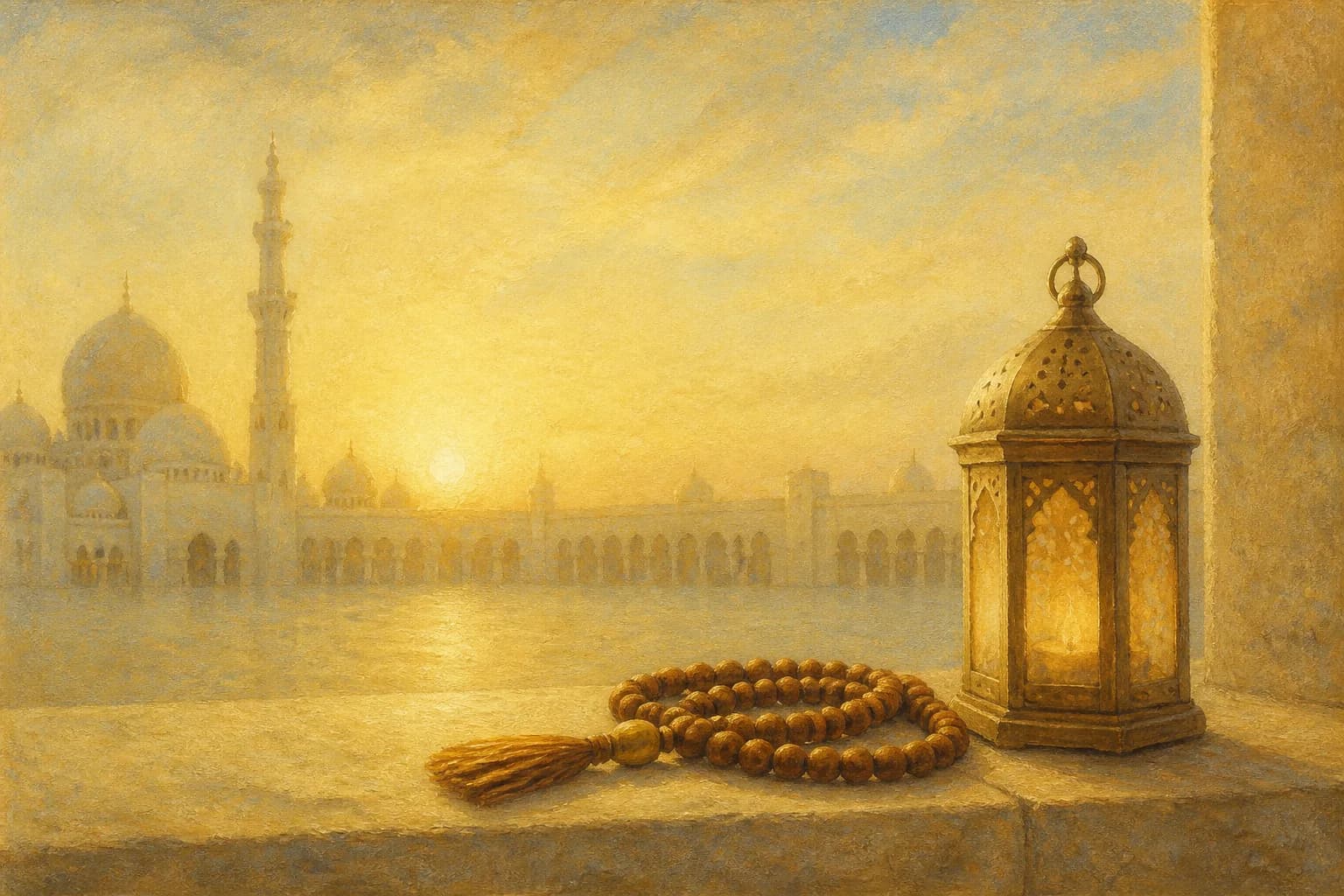

There is a moment each day — right after Fajr, when the world is still quiet and the demands of the day have not yet arrived — that the Prophet ﷺ reserved for something specific. He would remain in his place of prayer and engage in remembrance until the sun rose. Not in a hurry. Not distracted. Simply present with Allah.
The morning and evening adhkar (adhkar al-sabah wal-masa) are that practice, made accessible to every Muslim. They are not rituals reserved for scholars or the extraordinarily devout. They are a set of short, powerful remembrances the Prophet ﷺ personally taught and practiced, now available to any believer willing to spend a few quiet minutes with them each day.
What Are the Morning and Evening Adhkar?
The morning and evening adhkar are a collection of prophetically authenticated supplications and remembrances Muslims recite after Fajr prayer (sabah, morning) and after Asr prayer (masa, evening). Drawn from authentic hadith in Sahih al-Bukhari, Sahih Muslim, Abu Dawud, and At-Tirmidhi, they include Quranic verses for protection, phrases of gratitude and praise, seeking forgiveness, and supplications for safety — together forming a spiritual boundary around the day that keeps the heart connected to Allah from dawn to dusk.
What Does the Quran Say About Morning and Evening Remembrance?
Allah addresses this directly and repeatedly:
يَا أَيُّهَا الَّذِينَ آمَنُوا اذْكُرُوا اللَّهَ ذِكْرًا كَثِيرًا وَسَبِّحُوهُ بُكْرَةً وَأَصِيلًا
"O believers! Always remember Allah often, and glorify Him morning and evening." — (Surah Al-Ahzab, 33:41-42, quran.com/33)
This instruction appears in more than fifteen places in the Quran. The word bukra (morning) refers to the time after Fajr, and asila (evening) refers to after Asr — precisely when the adhkar are meant to be recited. The repetition across the Quran signals how central this practice is to a believer's day.
When Are Morning and Evening Adhkar Recited?
| Adhkar | Optimal Time | Window |
|---|---|---|
| Morning adhkar (adhkar al-sabah) | After Fajr until sunrise | Until midday in some scholarly opinions |
| Evening adhkar (adhkar al-masa) | After Asr until Maghrib | Until before sleeping |
The Prophet ﷺ modeled morning adhkar by remaining seated in his prayer spot after Fajr until the sun had fully risen. Anas ibn Malik (may Allah be pleased with him) narrated that this was his consistent practice. (Sahih Muslim 670)
What to Recite: Key Morning Adhkar
The morning adhkar are not a single dua — they are a set of categories of remembrance. Here are the most important:
Ayatul Kursi — Protection from Shaytan
Recite Ayatul Kursi (Al-Baqarah 2:255) once. The Prophet ﷺ said: "Whoever recites Ayatul Kursi after each obligatory prayer — nothing prevents him from entering Paradise except death." (Sahih al-Bukhari 6354)
The Three Quls — Three Times Each
Recite Surah Al-Ikhlas, Surah Al-Falaq, and Surah An-Nas three times each. The Prophet ﷺ taught that reciting these three surahs morning and evening suffices for every matter, including protection from evil eye, envy, and harm. (Abu Dawud 5082, At-Tirmidhi 3575)
Sayyidul Istighfar — The Master Supplication for Forgiveness
اللَّهُمَّ أَنْتَ رَبِّي لَا إِلَهَ إِلَّا أَنْتَ، خَلَقْتَنِي وَأَنَا عَبْدُكَ، وَأَنَا عَلَى عَهْدِكَ وَوَعْدِكَ مَا اسْتَطَعْتُ...
"O Allah, You are my Lord, there is no god but You. You created me and I am Your servant. I am upon Your covenant and promise as best I can..." — Recite once in the morning. (Sahih al-Bukhari 6306, sunnah.com)
Subhan Allah wa Bihamdihi — 100 Times
سُبْحَانَ اللهِ وَبِحَمْدِهِ
"Glory be to Allah and all praise belongs to Him." — 100 times in the morning. The Prophet ﷺ said this erases sins even if they are as numerous as sea foam. (Sahih Muslim 2691)
For the complete authenticated list of morning adhkar with full Arabic text, see the morning adhkar in Islam guide and the detailed Athkar al-Sabah reference.
What to Recite: Key Evening Adhkar
The evening adhkar mirror the morning set in structure. The same categories — Ayatul Kursi, the three Quls, Sayyidul Istighfar, and the protective duas — are recited, with the time reference shifted from morning (asbahna) to evening (amsayna).
A key evening opening dua:
اللَّهُمَّ بِكَ أَمْسَيْنَا، وَبِكَ أَصْبَحْنَا، وَبِكَ نَحْيَا، وَبِكَ نَمُوتُ، وَإِلَيْكَ الْمَصِيرُ
"O Allah, by You we enter the evening, and by You we enter the morning, and by You we live, and by You we die, and to You is the return." — (Abu Dawud 5068)
The evening adhkar in Islam guide and the evening adhkar reference have the full set with transliterations and sources.
Do you feel your duas are unanswered?
Have you read the dua properly? Learn authentic duas, understand their meanings, and call upon Allah with greater confidence through DeenUp.
Take the Dua Quiz
Why Are Morning and Evening Adhkar So Powerful?
Ibn al-Qayyim described the morning and evening adhkar as comprehensive spiritual armor — protection from harm, illness, and spiritual attack. Here is what they guard:
- From Shaytan and evil eye — Ayatul Kursi and the three Quls provide specific Quranic shields
- From anxiety and fear — The morning trust duas (tawakkul duas) settle the heart before daily pressures begin
- From heedlessness of Allah — Consistent dhikr keeps Allah present in consciousness throughout the day
- From sin — Sayyidul Istighfar wipes the slate clean each morning and evening
The Prophet ﷺ said: "The example of the one who remembers his Lord and the one who does not is like the example of the living and the dead." (Sahih al-Bukhari 6407) The importance of dhikr in Islamic spirituality cannot be overstated — it is the water the heart drinks from.
How to Build a Consistent Adhkar Practice
Starting does not require perfection. It requires small, honest steps.
Begin with three. Pick Ayatul Kursi, the three Quls, and Sayyidul Istighfar. Commit to those three after Fajr for one week. Consistency with a few is worth more than rushing through everything once and abandoning it.
Stay seated after salah. The Prophet ﷺ did not leave his prayer spot before completing his adhkar. Building the trigger — prayer → stay seated → adhkar — is the most reliable way to make the practice automatic. The dhikr after salah habit and the adhkar connect naturally at this point.
Use a reference until you memorize. There is no shame in reading from a phone or a card. Many Muslims recite from written sources for years before memorizing the full set. Sincerity of heart is what matters. DeenUp's built-in adhkar reminders and references make this easy.
Tie the evening adhkar to Asr. A soft alarm after Asr prayer to stay an extra five minutes for the evening adhkar is one of the highest-leverage habits a Muslim can build. The fajr prayer benefits and the adhkar that follow it anchor the morning; Asr and its adhkar anchor the evening.
For practical daily routine ideas that incorporate these adhkar, DeenBack's morning adhkar guide and Demimanifest's Islamic morning routine offer useful complementary perspectives.
For a scholarly source on the authentic texts and their chains of narration, the IslamQA compilation of morning and evening adhkar is highly recommended.
Morning and Evening Adhkar: Quick Reference Table
| Remembrance | Morning | Evening | Times | Source |
|---|---|---|---|---|
| Ayatul Kursi | ✓ | ✓ | 1x | Bukhari 6306 |
| Al-Ikhlas, Al-Falaq, An-Nas | ✓ | ✓ | 3x each | Abu Dawud 5082 |
| Sayyidul Istighfar | ✓ | ✓ | 1x | Bukhari 6306 |
| Subhan Allah wa bihamdihi | ✓ | — | 100x | Muslim 2691 |
| La ilaha illallah (100x) | ✓ | — | 100x | Bukhari/Muslim |
| Morning opening dua | ✓ | — | 1x | Abu Dawud 5068 |
| Evening opening dua | — | ✓ | 1x | Abu Dawud 5068 |
Do you feel your duas are unanswered?
Have you read the dua properly? Learn authentic duas, understand their meanings, and call upon Allah with greater confidence through DeenUp.
Take the Dua QuizSigns You Are Building a Real Adhkar Practice
Progress in the adhkar is measured not in completion speed but in what settles in the heart:
- A quiet calm before the day's demands arrive — the morning adhkar genuinely reduces anxiety when practiced consistently
- Phrases from the adhkar surfacing naturally during difficulty — a sign they are becoming part of your inner vocabulary
- A deliberate moment of closing the day in gratitude — the evening adhkar create a bookend that makes the day feel spiritually complete
The duas to read after salah offer a related practice that builds naturally on the adhkar habit. Together, these daily remembrances are among the most accessible and transformative practices the Sunnah offers.
May Allah make our tongues moist with His remembrance — Allahu akbar, and may He accept it from us.
Frequently Asked Questions
What are the morning and evening adhkar in Islam?
The morning and evening adhkar (adhkar al-sabah wal-masa) are sets of authentic prophetic supplications Muslims recite after Fajr until sunrise and after Asr until Maghrib. They are drawn from the Quran and verified hadith in Sahih al-Bukhari, Muslim, Abu Dawud, and Tirmidhi, forming a spiritual frame around the day.
When is the best time for morning adhkar?
The optimal time for morning adhkar is after Fajr prayer until the sun rises. The Prophet Muhammad (peace be upon him) would sit in his prayer spot after Fajr engaging in dhikr until sunrise, as recorded in Sahih Muslim 670. Some scholars extend the window until midday for those who miss it.
When should evening adhkar be recited?
Evening adhkar should be recited after Asr prayer until Maghrib (sunset). This corresponds to the Quranic instruction to glorify Allah morning and evening (Surah Al-Ahzab, 33:41-42). Reciting them after Maghrib before sleeping is acceptable, though after Asr is the preferred time.
What is included in the morning adhkar?
Morning adhkar include Ayatul Kursi (Al-Baqarah 2:255), Surahs Al-Ikhlas, Al-Falaq, and An-Nas recited three times each, Sayyidul Istighfar (the master supplication for forgiveness), 'Subhan Allah wa bihamdihi' 100 times, and several protective duas taught by the Prophet Muhammad (peace be upon him).
How long does it take to recite morning and evening adhkar?
Reciting the core morning adhkar typically takes 10 to 20 minutes. The evening adhkar are similar in length. A consistent Muslim can complete both sets in under 40 minutes daily. Scholars emphasize that consistency and presence of heart matter far more than speed.
Can I recite morning adhkar while reading from a phone or book?
Yes, reciting morning and evening adhkar while reading from a phone, screen, or printed card is perfectly valid. Many scholars encourage beginners to use written references while memorizing the adhkar gradually. Sincerity of intention matters more than whether the words are memorized or read.
What if I miss my morning or evening adhkar?
If you miss morning adhkar, recite them as soon as you remember — scholars differ on whether they can be made up outside their window, but reciting them is better than leaving them. Missing them carries no sin, but the Prophet encouraged making them a consistent daily practice.