

- Authors

- Name
- Ahmad
- Role
- Senior Marketing Manager, Islamic education • DeenUp
بِسْمِ اللهِ الرَّحْمٰنِ الرَّحِيْمِ
In the name of God, the Most Gracious, the Most Merciful.
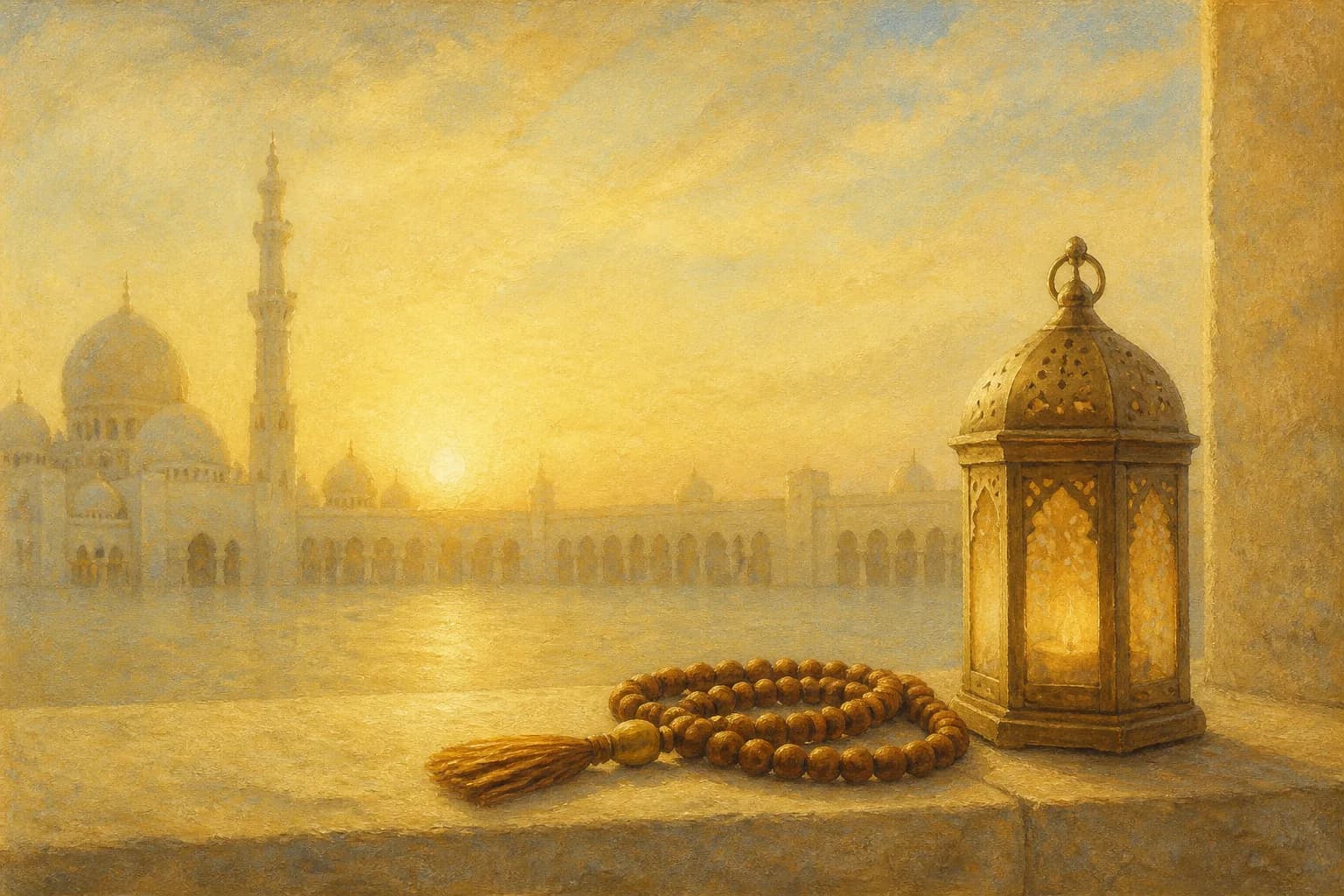

After the taslim of Fajr — after you turn right and then left and say assalamu alaykum wa rahmatullah — there is a window that the Prophet ﷺ treated as sacred. The sun has not yet risen. The house is quiet. Your heart is still oriented toward Allah from the prayer you just completed. This is the window for the morning azkar: a sequence of remembrances that scholars have extracted from authentic hadith and compiled as protection, gratitude, and connection for the day ahead.
The morning azkar after Fajr are not a second prayer. They are a continuation of the dhikr you began at wudu, a practice the Prophet ﷺ is reported to have never neglected. This guide walks through each one — what to recite, in what order, and why it matters.
What Are the Morning Azkar After Fajr?
The morning azkar after Fajr are a set of Quranic verses and prophetic supplications recited after completing the Fajr prayer, ideally before sunrise. They include Ayat al-Kursi (once), Surah Al-Ikhlas, Al-Falaq, and An-Nas (three times each), the tasbih sequence of Subhan Allah (33x), Alhamdulillah (33x), and Allahu Akbar (34x), and the Sayyid al-Istighfar. Together, these establish divine protection over the day, acknowledge complete dependence on Allah, and build the habit of beginning each morning in a state of conscious gratitude.
The Core Morning Azkar: Arabic, Transliteration, and Source
1. Ayat al-Kursi
Recite once after completing Fajr.
اللَّهُ لَا إِلَٰهَ إِلَّا هُوَ الْحَيُّ الْقَيُّومُ ۚ لَا تَأْخُذُهُ سِنَةٌ وَلَا نَوْمٌ ۚ لَّهُ مَا فِي السَّمَاوَاتِ وَمَا فِي الْأَرْضِ ۗ مَن ذَا الَّذِي يَشْفَعُ عِندَهُ إِلَّا بِإِذْنِهِ ۚ يَعْلَمُ مَا بَيْنَ أَيْدِيهِمْ وَمَا خَلْفَهُمْ ۖ وَلَا يُحِيطُونَ بِشَيْءٍ مِّنْ عِلْمِهِ إِلَّا بِمَا شَاءَ ۚ وَسِعَ كُرْسِيُّهُ السَّمَاوَاتِ وَالْأَرْضَ ۖ وَلَا يَئُودُهُ حِفْظُهُمَا ۚ وَهُوَ الْعَلِيُّ الْعَظِيمُ
"Allah — there is no deity except Him, the Ever-Living, the Sustainer of existence. Neither drowsiness overtakes Him nor sleep. To Him belongs whatever is in the heavens and whatever is on the earth. Who is it that can intercede with Him except by His permission? He knows what is before them and what will be after them, and they encompass not a thing of His knowledge except for what He wills. His throne extends over the heavens and the earth, and their preservation tires Him not. And He is the Most High, the Most Great." (Surah Al-Baqarah, 2:255)
— Whoever recites it after every obligatory prayer, nothing prevents him from entering Paradise except death. (Sahih al-Bukhari 6464)
2. Surah Al-Ikhlas, Al-Falaq, and An-Nas (Three Times Each)
Recite each surah three times after Fajr and Maghrib.
قُلْ هُوَ اللَّهُ أَحَدٌ اللَّهُ الصَّمَدُ لَمْ يَلِدْ وَلَمْ يُولَدْ وَلَمْ يَكُن لَّهُ كُفُوًا أَحَدٌ
"Say: He is Allah, the One. Allah, the Eternal Refuge. He neither begets nor is born. Nor is there to Him any equivalent." (Surah Al-Ikhlas, 112)
Then recite Surah Al-Falaq (113) and Surah An-Nas (114), each three times.
The Prophet ﷺ said: "Reciting Qul Huwa Allahu Ahad and the Mu'awwidhatayn (Al-Falaq and An-Nas) three times in the morning and evening is sufficient for you against everything." (Abu Dawud 5082, Tirmidhi 3575)
3. The Tasbih Sequence
Recite after completing the previous azkar.
سُبْحَانَ اللهِ (33 times) — "Glory be to Allah"
الْحَمْدُ لِلّهِ (33 times) — "All praise is for Allah"
اللَّهُ أَكْبَرُ (34 times) — "Allah is the Greatest"
The Prophet ﷺ said: "Whoever says Subhan Allah 33 times, Alhamdulillah 33 times, and Allahu Akbar 34 times after every prayer — that is a hundred total — his sins will be forgiven even if they are like the foam of the sea." (Sahih Muslim 597)
4. Sayyid al-Istighfar
Recite once, with firm conviction, in the morning.
اللَّهُمَّ أَنْتَ رَبِّي لَا إِلَهَ إِلَّا أَنْتَ خَلَقْتَنِي وَأَنَا عَبْدُكَ وَأَنَا عَلَى عَهْدِكَ وَوَعْدِكَ مَا اسْتَطَعْتُ أَعُوذُ بِكَ مِنْ شَرِّ مَا صَنَعْتُ أَبُوءُ لَكَ بِنِعْمَتِكَ عَلَيَّ وَأَبُوءُ لَكَ بِذَنْبِي فَاغْفِرْ لِي فَإِنَّهُ لَا يَغْفِرُ الذُّنُوبَ إِلَّا أَنْتَ
"O Allah, You are my Lord. There is no deity except You. You created me and I am Your servant. I am upon Your covenant and promise to the best of my ability. I seek refuge in You from the evil of what I have done. I acknowledge Your blessing upon me and I acknowledge my sins. So forgive me, for none forgives sins except You."
— The Prophet ﷺ said: whoever recites this in the morning with firm faith and dies before evening will be of the people of Paradise. (Sahih al-Bukhari 6306)
Why This Practice Matters
The morning azkar are not a checklist. Each piece is rooted in a specific prophetic teaching about what these words accomplish in the unseen.
Ayat al-Kursi establishes divine sovereignty over your day — reciting it is, in essence, placing yourself under the protection of the One who never sleeps and to whom all dominion belongs. The three Quls provide coverage: Al-Ikhlas purifies tawhid, while Al-Falaq and An-Nas are described in hadith as seeking refuge from every created harm.
The tasbih sequence — Subhan Allah, Alhamdulillah, Allahu Akbar — trains the tongue and the heart to recognize Allah's glory, praise His provisions, and acknowledge His greatness as the first orientation of the day. The Prophet ﷺ described these words as "heavy on the scale, light on the tongue, and beloved to the All-Merciful" (Sahih al-Bukhari 6406).
The Sayyid al-Istighfar closes the morning window with an act of comprehensive repentance — not from a specific sin, but from the general shortfall of every created being before their Creator. It is an acknowledgment that begins the day in spiritual honesty.
For the fuller context of all post-prayer remembrances throughout the day, adhkar after salat covers the complete authenticated sequence. The broader morning azkar practice goes through additional supplications from the Hisn al-Muslim collection.
Reference: Morning Azkar After Fajr at a Glance
| Azkar | Count | Source |
|---|---|---|
| Ayat al-Kursi (2:255) | 1x | Sahih al-Bukhari 6464 |
| Surah Al-Ikhlas (112) | 3x | Abu Dawud 5082 |
| Surah Al-Falaq (113) | 3x | Abu Dawud 5082 |
| Surah An-Nas (114) | 3x | Abu Dawud 5082 |
| Subhan Allah | 33x | Sahih Muslim 597 |
| Alhamdulillah | 33x | Sahih Muslim 597 |
| Allahu Akbar | 34x | Sahih Muslim 597 |
| Sayyid al-Istighfar | 1x | Sahih al-Bukhari 6306 |
Building the Habit: From Occasional to Consistent
The challenge with morning azkar is not knowing what to recite — it is doing it consistently. There is a gap between reading a guide like this one and actually sitting down after Fajr, every morning, before sunrise.
A few practices that make this sustainable:
Stay in your prayer spot. The simplest change. After the taslim, do not move. Keep your musalla in place, stay seated, and begin the azkar before you stand up. Motion is the enemy of the morning window.
Connect it to something physical. Use tasbeeh beads or count on your fingers — the Prophet ﷺ used both. Physical counting keeps the mind present and gives the body something to do that prevents restlessness.
Start with one piece, not all of them. If the full sequence feels overwhelming, start with Ayat al-Kursi alone. Do that consistently for a week. Add the three Quls the following week. Build incrementally rather than attempting the full practice and abandoning it after three days.
Mark progress. Habit research consistently shows that tracking completion — even a simple checkmark in a notebook — increases consistency significantly. What gets measured gets done.
DeenUp's daily habit tracking lets you log your morning azkar practice each day and build streaks that maintain momentum. The app also sends a reminder at your chosen time — useful for the days when Fajr comes early and the mind is slow to orient.
Do you feel your duas are unanswered?
Have you read the dua properly? Learn authentic duas, understand their meanings, and call upon Allah with greater confidence through DeenUp.
Take the Dua Quiz
For the broader context of the morning and evening adhkar as a complete daily practice, or to explore the benefits of Fajr prayer in the life of a Muslim, these guides build on the foundation established here.
The importance of dhikr in Islam provides the scholarly and spiritual framework behind why consistent remembrance is described in the Quran as the means by which hearts find rest (Surah Ar-Ra'd, 13:28).
Signs That the Practice Is Taking Root
The morning azkar are not primarily about length of practice or number of repetitions. They are about a quality of presence. A few signs that the practice is deepening:
You finish the tasbih and realize you were aware of each count — not on autopilot. You notice that mornings when you complete the azkar feel qualitatively different from those when you rush out without them. The words begin to feel less like a script and more like a conversation. You find yourself recalling phrases from the morning azkar later in the day when you need them.
The Prophet ﷺ praised the one who sits after Fajr in dhikr until the sun rises and prays two rakahs — describing his reward as equivalent to a complete Hajj and Umrah (Tirmidhi 586). The morning window is not only about protection; it is one of the highest-value opportunities available to a Muslim every single day.
For deeper learning on specific elements, best dhikr to recite daily covers the most impactful remembrances from the prophetic tradition with their meanings and benefits.
External resources on building consistent Islamic morning habits are available at Deen Back's guide to daily adhkar after prayer and Demi Manifest's resource on morning gratitude habits.
For primary hadith sources, Sunnah.com provides full-text access to Sahih al-Bukhari, Sahih Muslim, Abu Dawud, and Tirmidhi for verification of every hadith cited above.
Conclusion
The morning azkar after Fajr take less than ten minutes. In that ten minutes, you cover your day with Ayat al-Kursi's protection, purify your tawhid with the three Quls, orient your heart with the tasbih, and close the window with the most comprehensive act of seeking forgiveness in the prophetic tradition.
The window closes at sunrise. Begin the practice tomorrow morning — stay in your prayer spot after the taslim, open this guide if you need it, and recite the first item: Ayat al-Kursi, once. Everything else follows from there.
Do you feel your duas are unanswered?
Have you read the dua properly? Learn authentic duas, understand their meanings, and call upon Allah with greater confidence through DeenUp.
Take the Dua QuizFrequently Asked Questions
What azkar should I read after Fajr?
After Fajr, recite Ayat al-Kursi, Surah Al-Ikhlas, Al-Falaq, and An-Nas each three times, followed by the tasbih sequence (Subhan Allah 33x, Alhamdulillah 33x, Allahu Akbar 34x), and the Sayyid al-Istighfar. These are the core morning azkar established in authentic hadith collections.
What is the reward for Ayat al-Kursi after Fajr?
Whoever recites Ayat al-Kursi after every obligatory prayer, nothing prevents them from entering Paradise when they die (Sahih al-Bukhari 6464). After Fajr specifically, reciting it extends protection until the next prayer, according to narrations collected by scholars from Abu Dawud and other sources.
How long do the morning azkar take?
The core morning azkar after Fajr take approximately five to ten minutes when recited at a calm, reflective pace. Ayat al-Kursi takes about thirty seconds; the three Quls (3x each) take two to three minutes; the tasbih sequence takes about two minutes. Consistency matters more than speed.
Can I recite morning azkar in English?
Arabic is preferred for the Quranic azkar (Ayat al-Kursi, the three Quls) because these are recited as they were revealed. For the tasbih and personal supplications, scholars permit recitation in your language when you are learning or when concentration is improved by understanding. The Arabic remains the standard.
What is the difference between morning azkar and adhkar after salah?
Post-prayer adhkar are recited immediately after the taslim of any salah. Morning azkar are a longer practice done after Fajr specifically, extending through the sunrise window. Post-prayer adhkar take about two minutes; the full morning azkar practice is a distinct, more extended session rooted in specific hadith about morning protection.
Is there a specific time window for morning azkar after Fajr?
The morning azkar should ideally be completed before sunrise. Scholars note that the window between Fajr and sunrise is among the most blessed times of day — the Prophet ﷺ specifically praised the one who sits and engages in dhikr after Fajr until sunrise (Tirmidhi 586). Completing the azkar within this window maximizes their benefit.
What if I forget to do morning azkar after Fajr?
Missing the morning azkar does not invalidate your prayer or make up additional obligations. If you miss them, scholars advise reciting them as soon as you remember, even after sunrise. The azkar are a Sunnah practice — their reward and protection are tied to the morning window, but reciting them later still brings benefit.